The JRPG Series That Refuses to Peak After Twenty Years
The PSP Game Nobody Expected to Last
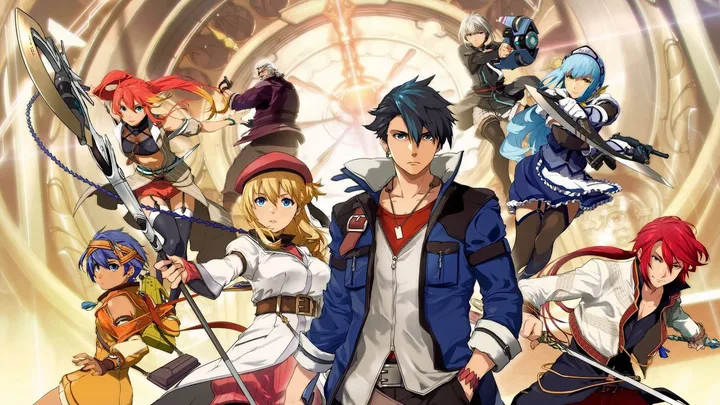
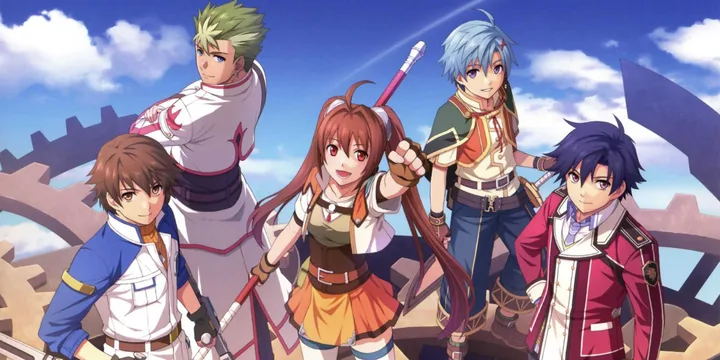
Trails in the Sky launched on PlayStation Portable in 2005. Falcom, a small Japanese studio already known for the Ys action RPG series, built something quieter — a slow-burn story about two teenagers named Estelle and Joshua trying to follow their father’s footsteps as professional Bracers, licensed adventurers in the tiny kingdom of Liberl. It did not look like the start of something enormous.
Twenty years later, the Trails franchise has thirteen games. Every one of them set in the same world. Every one connected, so a supporting character in one arc can show up years later with a completely different life in another protagonist’s story. The world just keeps accumulating history.
One World, Thirteen Games, Zero Resets
Most JRPGs reset the clock with each new entry — different world, different heroes, fresh mythology. Falcom went the other way. The Trails universe spans roughly a decade of in-universe time, and every game is set on the same planet, with the same political factions bumping into each other in new configurations.
The series moves by continent. Trails in the Sky covers the rural kingdom of Liberl. The next arc shifts to Crossbell, a dense metropolitan city-state caught between two superpowers. Trails of Cold Steel drops players into Erebonia, a sprawling empire with its own class tensions and military politics. The most recent Daybreak arc moves to Calvard, a republic with a very different flavor. Each region has its own governance, its own street-level texture, its own conflicts. It reads like a living atlas.
Combat That Never Goes Stale
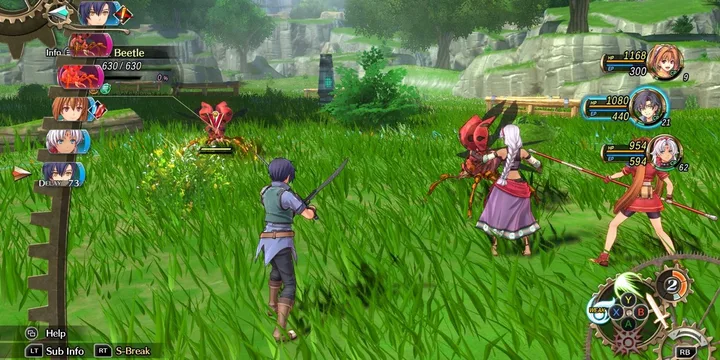
The battle system at launch was already stronger than most. Trails games use an Orbment system, a riff on Final Fantasy VII’s Materia, where characters slot magical gems called Quartz into specialized equipment. Quartz determines both a character’s stats and which spells they can cast, so customization runs deep without feeling arbitrary.
Falcom hasn’t maintained that system unchanged for twenty years. They’ve layered onto it. Trails of Cold Steel III added Brave Orders, special commands that throw party-wide buffs for multiple turns and rewrite the calculus of harder fights entirely. The Daybreak arc bolted on real-time combat for open-world encounters, so players can clear weaker enemies before a turn-based fight even loads. No two arcs feel quite the same to play.
Annual Releases and the Secret Behind Them
Final Fantasy’s last mainline entry was 2023. Dragon Quest and Persona both last released in 2017. Those gaps are understandable given the scope involved, but they cost something. Fans drift. Interest cools. You can spend a decade building goodwill and lose most of it in a long enough silence.
Trails has averaged roughly one new game per year since 2005. The longest drought in franchise history is three years, and even that’s an outlier. The secret is disciplined asset reuse: when Falcom builds a new country for an opening arc, follow-up games revisit the same cities. Players grow more attached to those streets. Falcom stays on schedule. It’s the same engine Ryu Ga Gotoku Studio used to build Yakuza into a powerhouse — master what you have before expanding.
A Remake That Finally Opens the Door
Getting into Trails has always been the hard sell. The original Trails in the Sky has PSP-era graphics and asks players to log something close to 60 hours before the story starts fully paying off. That’s a steep ask in 2026, even for dedicated RPG fans.
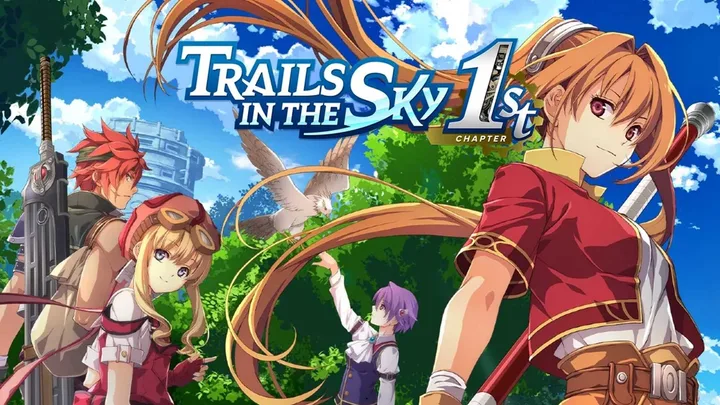
Falcom addressed it last year with Trails in the Sky 1st Chapter, a full remake released for the franchise’s twentieth anniversary. The visuals are rebuilt. Combat now lets players toggle between real-time and turn-based at will. It ends on one of the sharpest cliffhangers in recent gaming memory, the kind that makes the sequel feel urgent rather than optional.
Built to End, and Better For It
The sequel remake, Trails in the Sky 2nd Chapter, is scheduled for later in 2026. Fans already caught up can look toward Trails Beyond the Horizon II in 2027. The release calendar has no gaps.
What separates Trails from its contemporaries is the plan. Falcom has announced the series will conclude within the next decade, and they’re building toward that deliberately. Every character arc, every political thread, every recurring face has somewhere to go. Endless franchises can be exhausting — there’s no weight to a single story when nothing ever resolves. Trails has weight. When it finally closes, it will likely stand as one of the most complete epics gaming has ever produced.