The Anime Worlds So Deadly Even Heroes Die Before the Credits
Where Monsters Wrote the Rules of History
Berserk’s Midland isn’t medieval Europe with dragons bolted on. It’s a continent where warfare is the only economy that matters, where peasants who aren’t conscripted as cannon fodder simply starve in the mud. Social mobility means picking up a sword and hoping your commanding officer dies slower than the enemy does.
The truly sick joke is that none of the bloodshed is accidental. After Griffith’s fall and transformation, it becomes clear the world runs on a cosmic engine of suffering — all-powerful demons called the God Hand shaping human fate toward maximum carnage. The people praying in those torchlit chapels? The only things listening are the things eating them.
What sets Berserk apart from standard dark fantasy is that Guts — the most terrifying fighter alive — barely survives. He doesn’t overcome the world. He endures it, barely, one mutilated limb at a time.
A Hole With No Bottom and No Mercy
Made in Abyss opens with a child staring into an enormous pit and thinking: I should go down there. She’s not wrong to be curious — the Abyss is full of wonders. She’s catastrophically wrong about surviving the trip back up.
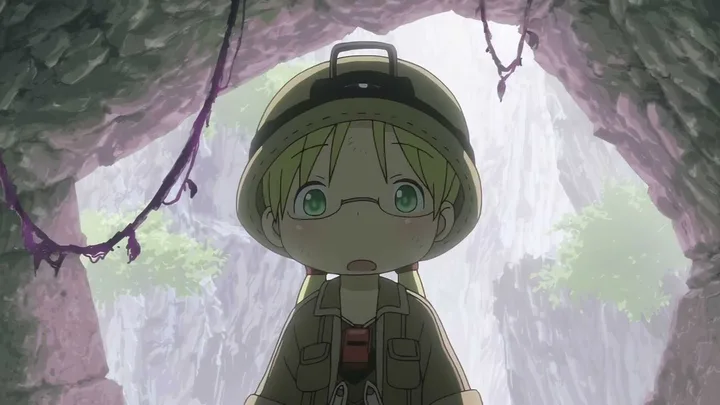
The Curse of the Abyss is the detail that makes this world uniquely cruel. Going down is merely dangerous. Coming back up is physiologically catastrophic — headaches and vomiting at shallow depths, hemorrhaging organs and death at the deepest layers. The hole doesn’t just threaten you. It punishes the act of trying to leave. The explorers who mapped its lower reaches didn’t come home. Some became something else entirely.
Every layer of that pit is exponentially worse than the one above it, populated by creatures that seem specifically designed to disassemble a human being. The world above the Abyss is perfectly pleasant. Most of the story doesn’t happen there.
The Universe Built as a Torture Chamber
Devilman Crybaby has the audacity to stack its tragedies. Demons possess humans and consume them from the inside out. The people who resist possession — rare, like protagonist Akira Fudo — become hybrid beings hunted by both sides. And when humanity does rally together? It turns on itself. The body count from human-on-human violence dwarfs the demon kills.
But the cosmological gut-punch is the reveal underneath all of it: Earth is a recurring nightmare. The planet has been seeded with life, watched it suffer, and wiped clean, again and again, as a kind of eternal punishment visited on the angel Lucifer. There is no winning condition. There never was. Everyone who ever lived in that world was a prop in someone else’s torment.
Teenagers at the End of the World
Neon Genesis Evangelion is technically a mecha show about giant robots punching alien monsters. That framing lasts about four episodes before it becomes a psychological breakdown dressed in apocalyptic imagery. The Angels — semi-divine entities of incomprehensible power — are almost secondary to the question of whether any of the children piloting humanity’s last line of defense will survive their own minds.
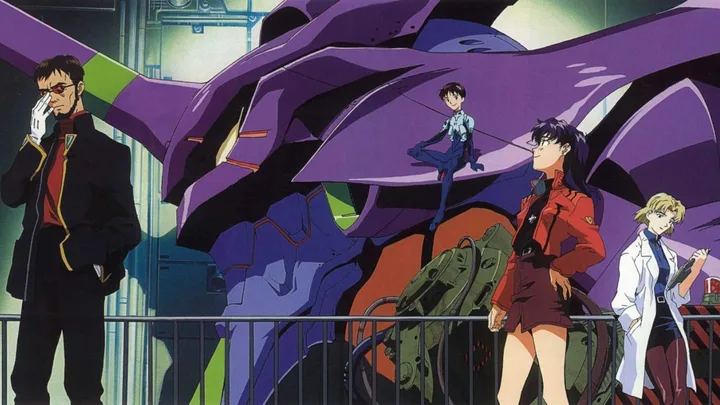
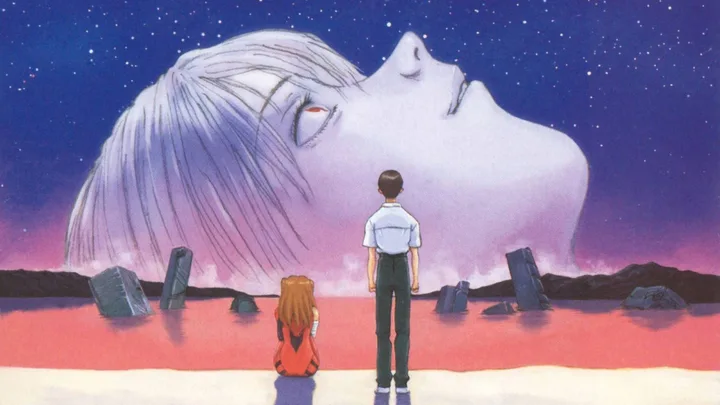
They don’t, really. The Instrumentality Project merges all of humanity into a single collective consciousness, which then collapses into one damaged teenager on a beach covered in the remains of everyone who ever existed. Shinji and Asuka are the last two people on Earth. No food, no infrastructure, no one else. The EVAs and the Angels and the secret organizations were all just foreplay for the actual ending, which is a boy choking a girl next to an orange sea.
Most mecha worlds at least let you lose with dignity. Evangelion took that away too.
Walls That Were Never Enough
Inside the walls on Paradis Island, life was almost manageable — constrained, monitored, but survivable. Then the Colossal Titan kicked a hole in the gate, and the math changed instantly. Titans don’t hunt strategically. They shamble and eat. That randomness makes them worse than a predator with intent. You can’t negotiate with something that has no agenda beyond swallowing you whole.
The Survey Corps soldiers who fight back have a casualty rate that would end any modern military in weeks. Veterans last months, maybe a year. Recruits last less. And that’s before you factor in the political violence inside the walls, the revelations about what Titans actually are, or the genocidal history that makes the whole conflict a tragedy rather than a monster story. Attack on Titan is a world where the heroes who survive long enough learn that surviving wasn’t the point.
Your Nightmares Are Literally Alive
Chainsaw Man’s world runs on a specific awful logic: every human fear, no matter how small or enormous, eventually manifests as a devil. Spider Devil. Darkness Devil. Gun Devil. The older and more primal the fear, the more catastrophically powerful the entity. Humanity has been generating these things since the first person was afraid of the dark, which means the most ancient terrors are functionally gods at this point.
The Gun Devil is the number that stays with you. Five minutes after manifesting in the physical world, it killed over a million people. In Japan alone, 57,912 people died in 26 seconds. It was born from millions of humans terrified of firearms, and it repaid that terror at scale. The devil hunters who fight these things aren’t heroes with superpowers. They’re people with slightly better odds of dying on their own terms.
Every Child Is Already on the Menu
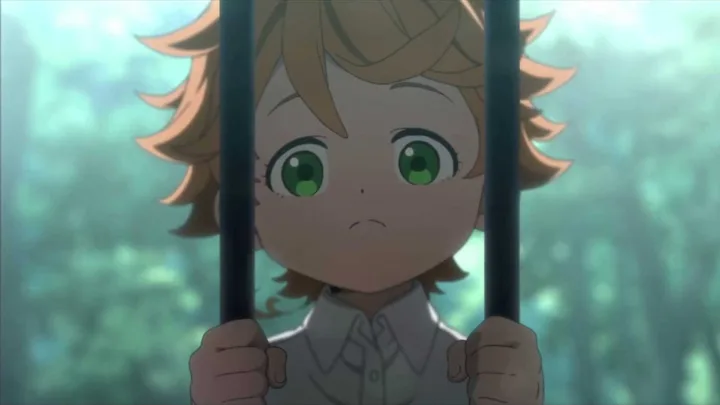
The Promised Neverland’s central horror is architectural. Demons conquered half the planet and needed a food supply, so they engineered one: human farms. Most humans never know. They’re born into compounds, raised to believe they have families and futures, and then harvested. The majority spend their entire short lives as livestock without understanding what they are.
The cruelest tier is the orphanages. High-ranking demons want premium product — intelligent, well-nurtured children, educated and emotionally rich, because apparently that improves the flavor. The orphans at places like Grace Field House think they’re waiting for adoption. The paperwork calls it that. What’s actually happening is a scheduled delivery date.
The children who figure it out — who see the system for what it is and run — are the protagonists. The ones who don’t figure it out are everyone else.
No Safety Net, No Exit
Cyberpunk: Edgerunners is set in a future where corporations own everything that keeps you alive — your hospital, your school, your apartment. Lose your job, lose your healthcare. Lose your healthcare, lose your arm. Lose your arm, get a chrome replacement you’ll be paying off for a decade, which means you can never quit the job that’s killing you. The loop is the point.
The alternative is crime. Street mercenaries sell violence to whoever’s paying, cycling through gang wars and corporate proxy conflicts until the cyberpsychosis sets in or a faster gun finds them first. David Martinez runs that circuit hard and burns brighter than almost anyone in Night City. The city rewards that exactly as much as it rewards everything else — with a body on the pavement and someone new filling the vacancy by morning.
Fashion as a Weapon of Mass Control
Kill la Kill’s Japan sounds absurd: high schools as feudal city-states, academic rank as social class, institutionalized combat as curriculum. Students in the lower ranks live in literal slums. Students at the top enjoy genuine luxury. Everyone fights constantly to hold their position. The school isn’t metaphorically violent. The school is violence, administered in uniform.
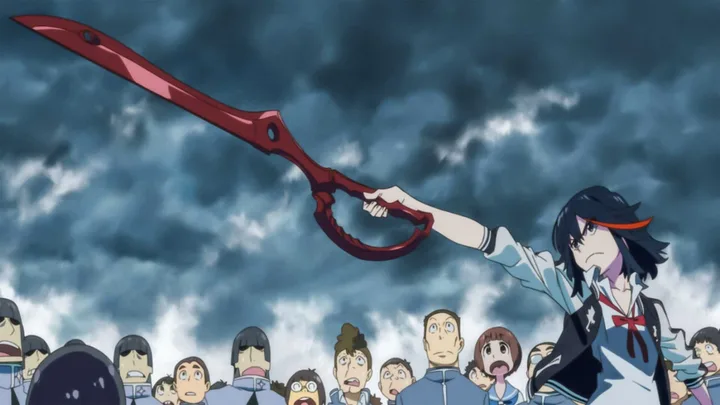
Then comes the larger reveal. The Revocs Corporation supplies all clothing on the planet, and each garment is woven through with alien thread-creatures that exert subtle control over the wearer’s mind. The students fighting each other in school-sanctioned combat are doing exactly what alien fabric wants them to do. The most mundane act — getting dressed in the morning — is an act of surrender to an extraterrestrial intelligence.
The Monster Wearing Your Neighbor’s Face
Parasyte: The Maxim is The Thing as a public health crisis. Alien parasites burrow into human skulls, consume the brain, and wear the body like a suit. They’re perfect mimics — same voice, same mannerisms, same routines. The infected move through society undetected, eating people when the opportunity presents itself, a mouth full of bladed tendrils appearing from somewhere that used to be a face.
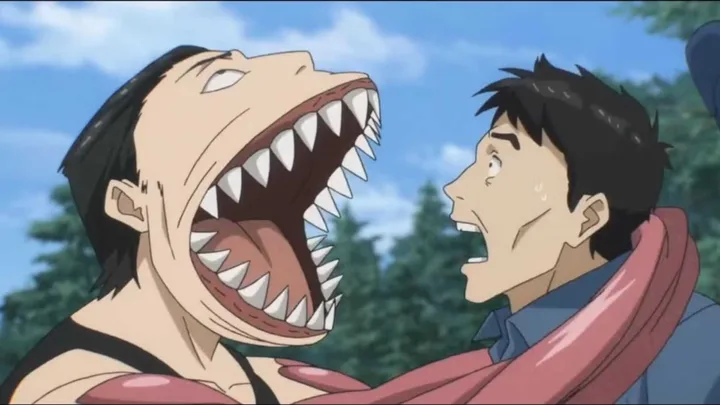
Protagonist Shinichi Izumi survived an infection only because his parasite took his hand instead of his head, leaving him with a dangerous partner rather than a replacement. That’s the exception. Everyone else who gets found by a parasite in the wrong moment just stops existing mid-sentence. The horror isn’t the transformation — it’s the gap between when it happened and when anyone else noticed.
No wall, no scan, no test catches them. The paranoia alone is enough to collapse civil society. Parasyte’s world is one where the most dangerous thing you’ll ever do is trust someone.