Women Are Wearing Their Great-Grandmothers’ Rings and Losing It Completely
The Ring That Finally Fits
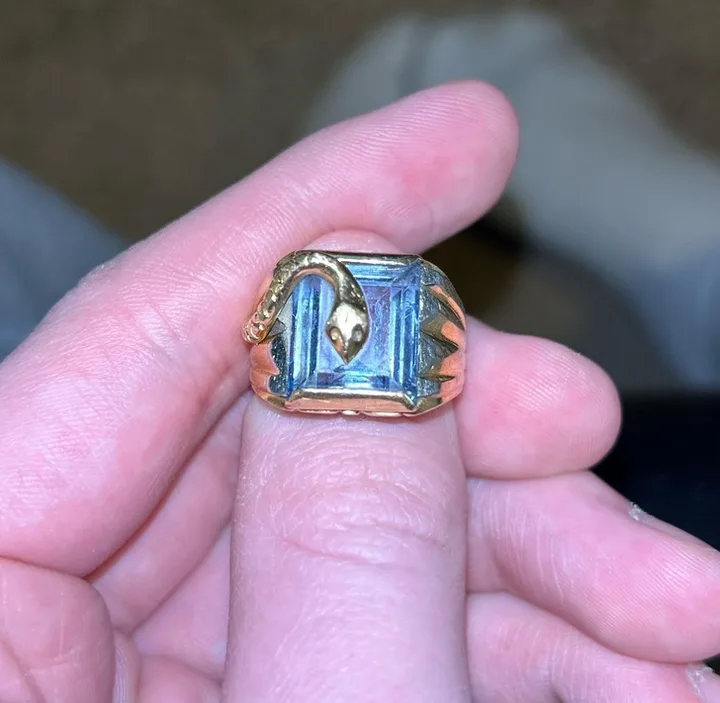
One woman slipped on her great-aunt’s rings and they fit as if custom-made for her hands. The rings are nearly a hundred years old. She posted about it online and said she hasn’t stopped crying since putting them on. That’s the shock of a physical connection across time — a piece of gold shaped by hands you never shook, now warm against your skin.
Dozens of people have shared their inherited jewelry in recent weeks, and the emotional reaction keeps being identical: disbelief, then tears, then the decision to never take it off. These aren’t locked-up museum pieces. They’re rings and brooches and pendants that sat in velvet boxes for decades, waiting for someone to claim them.
The Cameo Nobody Could Bear to Box Away
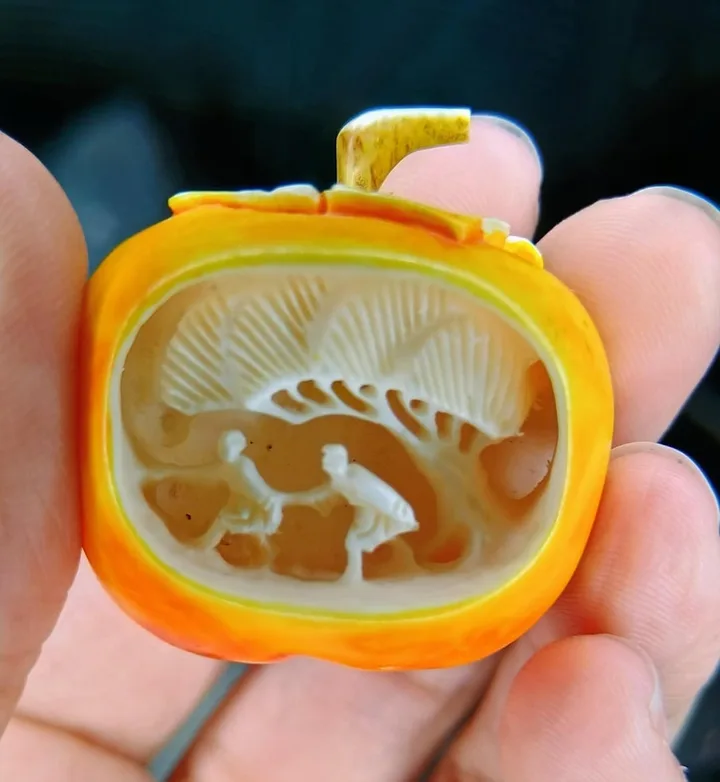
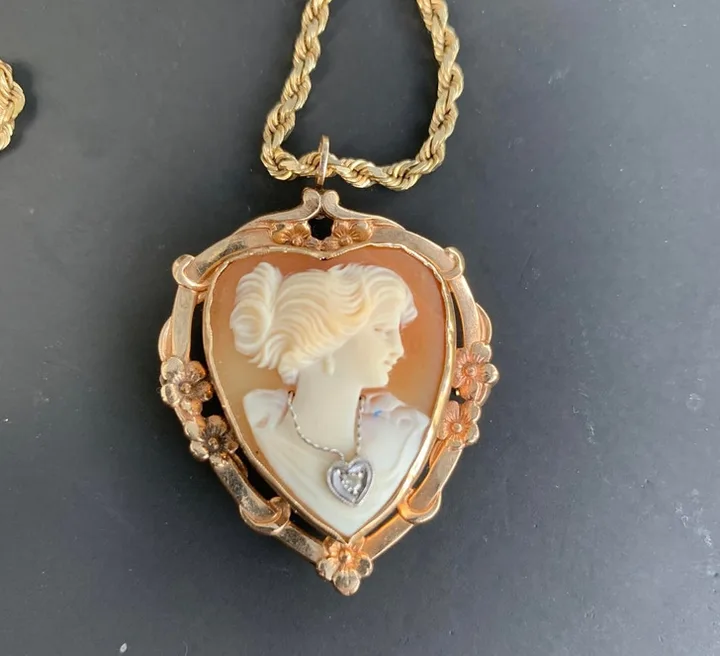
One woman inherited her grandmother’s cameo and made a deliberate choice: she wears it constantly. How can she keep something so beautiful in storage? The piece is carved shell, figures under a tree, and it’s exactly the kind of object that loses something in the dark.
Another person received a heart-shaped pendant from their grandmother, who got it from her grandmother before that. Nobody in the chain knows where it originally came from. The chain of possession stretches back so far that the origin has become genuinely untraceable — which somehow makes it more interesting, not less.
Diamonds From the 1920s
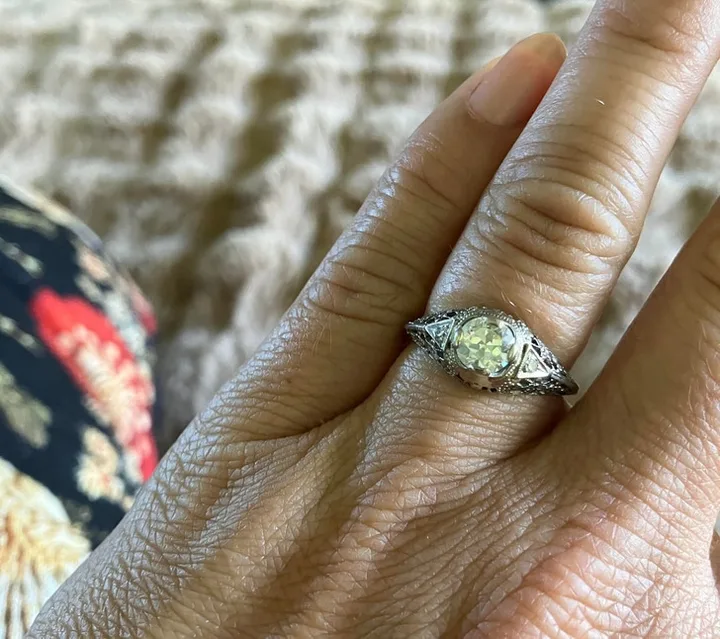
An engagement ring from the 1920s, intricate filigree, belonging to a fiancé’s great-grandmother. A family ring over a hundred years old, now on the finger of the next person in line. A great-grandmother’s solitaire passed to a granddaughter who never met the woman who first wore it. These pieces keep surfacing, and each one carries the same quality: they look better than anything made recently.
One grandmother’s family wasn’t wealthy. Her ring reflects that — modest in scale, obviously worn, with the specific beauty of something that was genuinely used for decades. A ring worn every day for forty years tells you more than a ring kept in cotton wool ever could.
Before and After
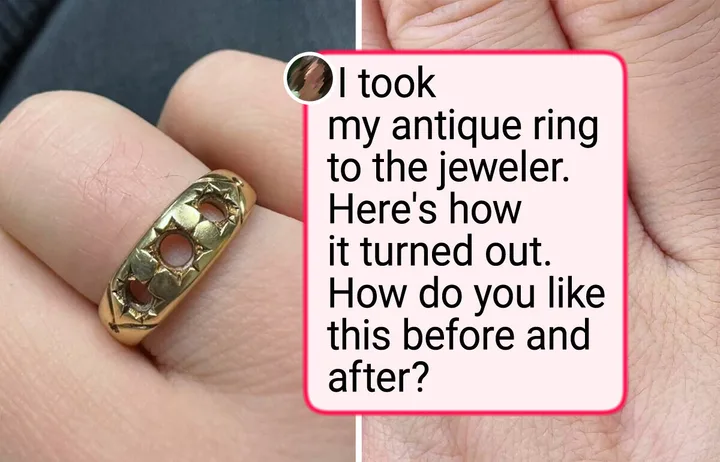
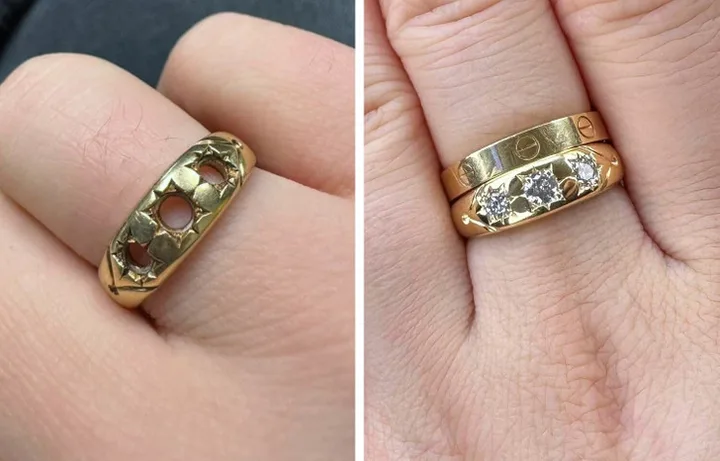
One woman took an antique ring to a jeweler. The before photo shows something dull and time-worn. The after shows diamonds reset, metal polished, the whole piece alive again. She posted both images and the reaction was immediate. The bones of the ring were always there. The jeweler just cleared away a century of fog.
Another woman built rather than restored. She had diamonds from her great-grandmother’s, grandmother’s, and mother’s rings combined with a ring from her husband’s great-great-grandmother. Four generations. One piece. She designed it herself, which means she understood exactly what she was doing — creating something that moves forward, not just backward.
Wedding Rings From Both Sides
One person’s parents divorced years ago. Their mother gave them her wedding ring. Then their father gave them his. Both rings, now together, held by the person who watched the marriage end. There’s no clean emotional category for that. Not grief exactly. Not reconciliation. Something harder to name.
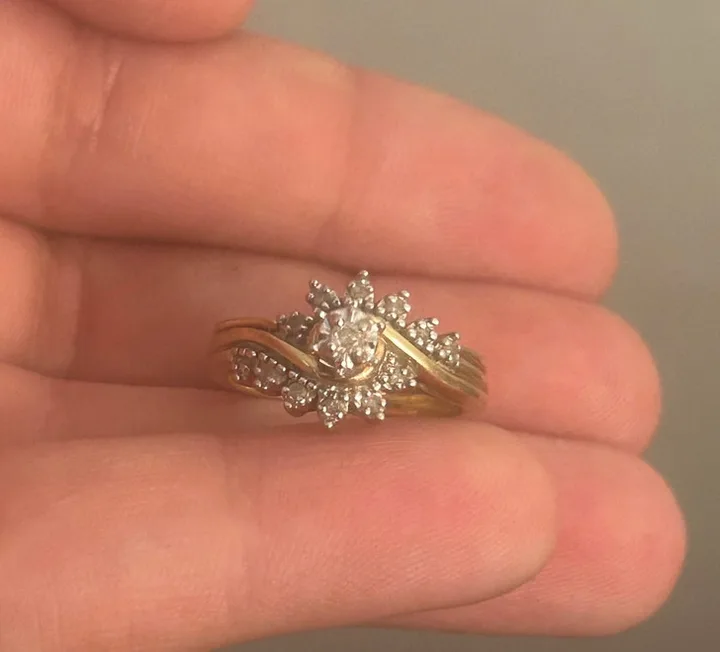
A boyfriend’s great-grandmother left him a collection of pieces — rings among them — and he shared some online. A sunburst set, gold and diamonds, resting in an open palm. Someone else’s great-aunt left a bracelet nobody knew she owned. She’d worked her entire life on the floor of a sewing factory. The bracelet was a secret she kept entirely to herself.
The Pendant With No Origin Story
A heart-shaped gold pendant, given by a grandmother who received it from her grandmother before that. No documentation. No origin story. Just the object itself, passed forward through hands that knew less and less about where it came from with each generation. The woman who has it now posted it online, hoping someone could place the period or the style. Nobody could.
Then there’s the brooch with an engraving on the back. It says it’s a gift from the queen. No date, no name, no context about which queen or which occasion. A family has been sitting on that detail for what may be a very long time without fully registering what it means.
Ivory, Belgium, and Other Surprises
Some pieces defy easy categorization. A set of jewelry from a grandmother born in 1929, who inherited them from her own mother — Asian in origin, details unknown. Another piece turned out to be ivory. A ring made in Belgium by a craftsman whose filigree work, over a hundred years later, still stops people cold. The jeweler’s name is lost. The skill is not.
One woman suspects her ring contains diamonds and white gold but hasn’t confirmed it. She’s thinking about taking it to an appraiser. She might find out something that changes how she understands the woman who owned it before her. That’s the thing about inherited jewelry: even after everything has been handed down, the story isn’t finished.