The Washington Monument Was Stolen From, Barely Held Together, and Almost Scrapped
Briefly the Tallest Thing on Earth
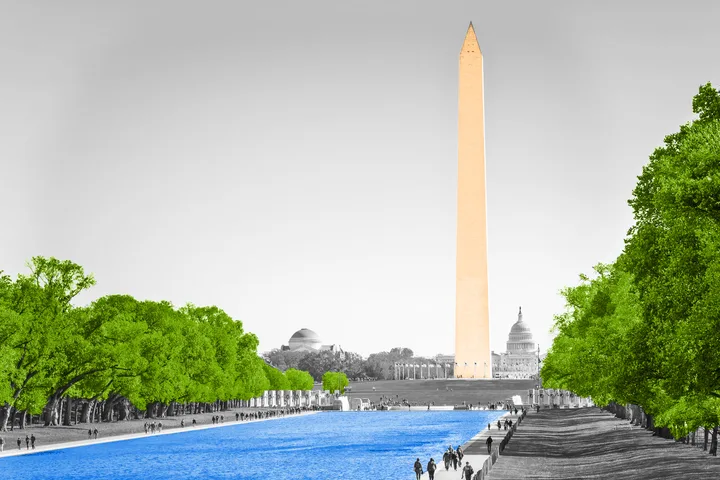
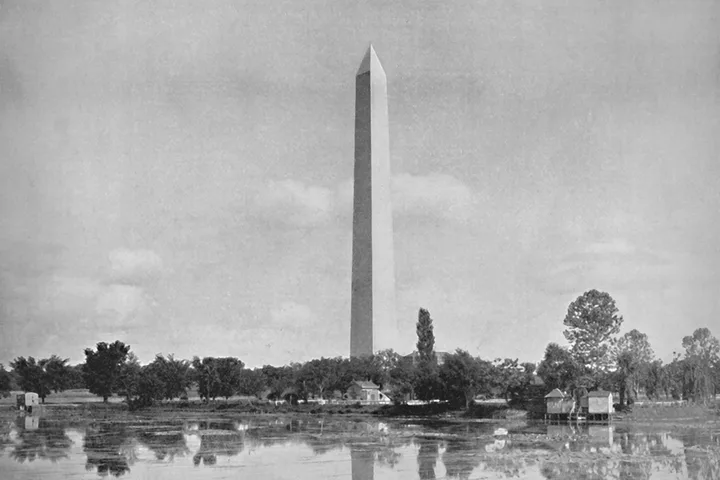
The Washington Monument rose painfully slowly over 36 years before the last stone was set in place on December 6, 1884. When it was finally done, the obelisk stood 555 feet and 5.125 inches tall. That made it the world’s tallest structure, edging out the Cologne Cathedral, which had held the record since its completion in 1880 at a comparatively modest 516 feet.
The reign was short. Five years later, the Eiffel Tower shot past it at 1,083 feet. Still, the monument held its American bragging rights for decades, until the 567-foot San Jacinto Monument in La Porte, Texas, was completed in 1939. Today it ranks third in the U.S., behind both that Texas tower and the 630-foot Gateway Arch in St. Louis.
Nothing Holds It Together — and That’s the Point
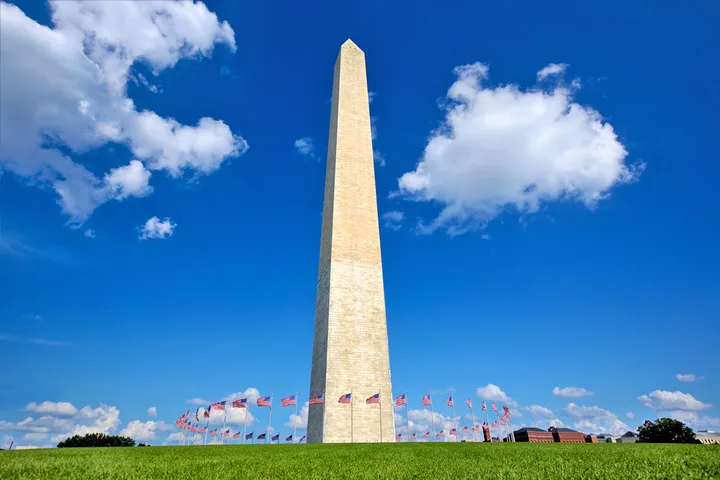
Most stone buildings rely on mortar to bind their blocks. Not this one. The Washington Monument is held together purely by gravity and friction, the sheer weight of each stone pressing down on the one below it. Engineers did apply mortar in certain spots, but only as weatherstripping. No reinforced steel skeleton. No hidden framework of any kind.
Al Roker put it bluntly in a 2011 report: the monument “is built the way the pyramids were — it is the weight of the stones that actually keeps it together.” Carol Johnson of the National Park Service has pointed out that this quirk qualifies the monument as the world’s tallest free-standing stone structure. Technically speaking, it is one bad shift in physics away from nothing.
The Pope Sent a Stone. Someone Stole It.
During the monument’s early construction, commemorative stones poured in from around the world, 193 in total, eventually embedded in the interior walls. One came from Alaska, made of jade. Another incorporated fragments of the Parthenon. Pope Pius IX sent a marble slab inscribed “A Roma Americae” — From Rome to America — cut from the ancient Temple of Peace in Rome.
Not everyone was pleased. Anti-Catholic nativist groups, particularly the Know Nothing Party, were furious. One widely circulated pamphlet declared that the papal gift “can never be looked upon by true Americans but with feelings of mortification and disgust.” The stone sat in storage, waiting to be installed.
In 1854, nine anonymous Know Nothing Party members stole the pope’s stone, smashed it beyond repair, and threw it into the Potomac River.
The gap went unfilled for over a century. Pope John Paul II finally sent a replica in 1982, and it now sits quietly in the monument’s interior walls, no placard drawing attention to what happened to its predecessor.
The Aluminum Cap and the Lightning That Chewed It Down
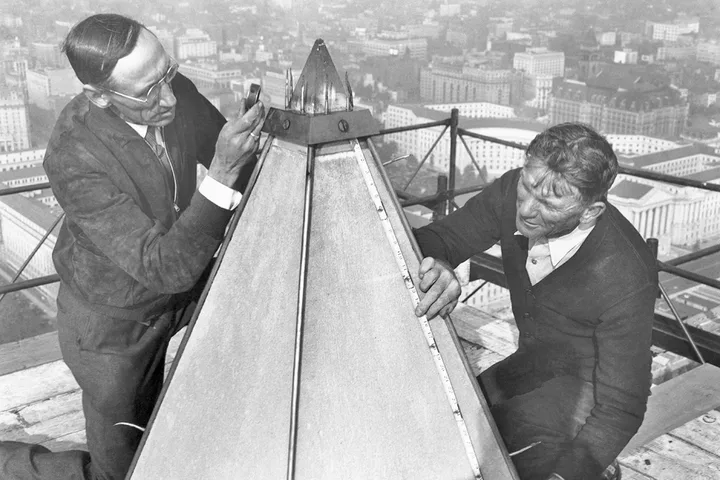
The original design called for a flat stone top. Engineers eventually decided they needed a lightning rod, and a pointed metal cap fit the bill. Thomas Lincoln Casey Sr., who oversaw the final construction phase, brought in Philadelphia metallurgist William Frishmuth. Frishmuth cast a piece of aluminum measuring 8.9 inches tall and weighing 100 ounces, the largest aluminum casting made up to that point in history.
Before it was shipped to Washington, Frishmuth put the cap on display at Tiffany’s in New York City. It was placed atop the monument on December 6, 1884. The cap did not hold up gracefully. Repeated lightning strikes shaved the tip down by three-eighths of an inch within six months. In July 1941, wartime aluminum scrap drives nearly claimed it entirely. Somehow, it survived and sits there still.
The Color Shift That Marks a 22-Year Pause
Look carefully at the Washington Monument and you will see a seam, a visible color shift roughly a third of the way up. The lower section runs slightly darker; the upper two-thirds lean more yellow. That line is not a design choice. It is a record of catastrophic stagnation baked into the stone itself.
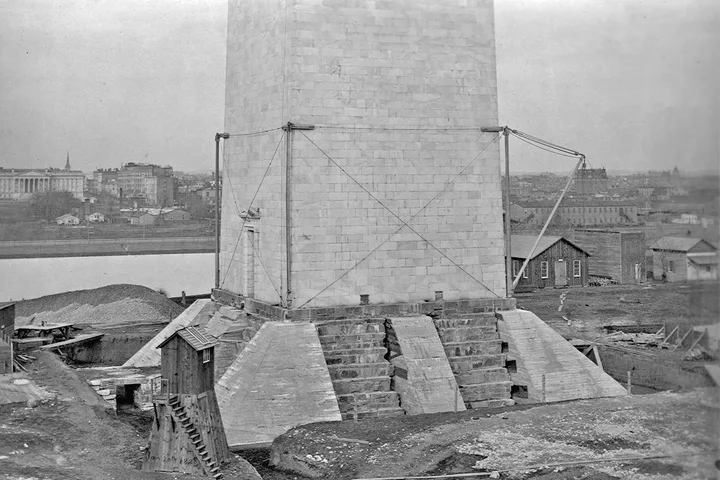
The first building phase ran from when the cornerstone was laid in 1848 until 1854, when private donations dried up and work halted at 152 feet. The half-built obelisk stood idle for over two decades. Congress finally authorized resumed construction in 1876, but by then the original Baltimore quarry was no longer an option. Replacement marble came from a different Maryland source, supplemented by granite from New England quarries.
When the monument was completed in 1884, it looked uniform, top to bottom. Then decades of wind, rain, and sun went to work differently on each set of stones. The color break widened. Today it is permanent and unmistakable, a scar that tells the whole story of the monument’s troubled construction if you know where to look.