The Bizarre True Stories Behind Six of America’s Most Famous Team Names
Pants, Pseudonyms, and New York’s Oldest Basketball Team
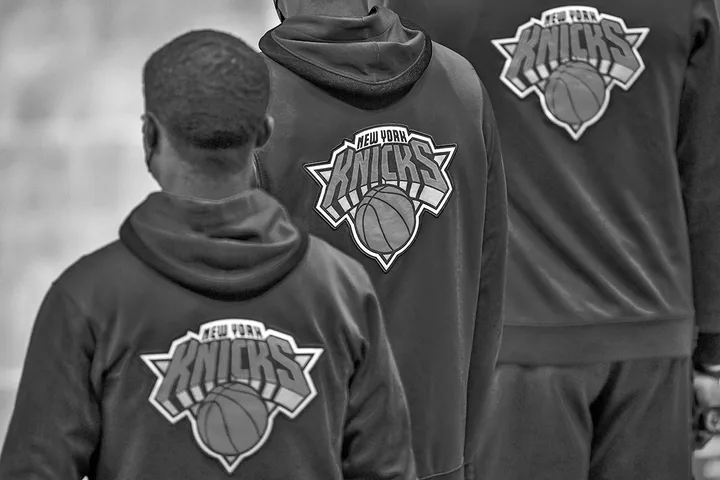
New York’s NBA franchise has gone by the Knicks for so long that most fans have no idea what the full name actually means. The team is still officially the Knickerbockers — and if you’ve never heard that word used in any other context, you’re in good company. The franchise even keeps an explanation on its official NBA page.
The name reaches back to the city’s Dutch colonial roots. New York was once New Amsterdam, and the Dutch settlers who built it wore a distinctive style of baggy, knee-length trousers that buckled just below the knee. Those pants became so associated with early New Yorkers that Washington Irving borrowed the style for a fictional historian named Diedrich Knickerbocker — the supposed author of his 1809 satirical history of the city. By the mid-1800s, the word had evolved into a term of affection for New Yorkers generally. When the basketball team formed, the name was a natural fit: local, historical, and just obscure enough to feel distinguished.
A $500 Handshake That Outlasted the Company
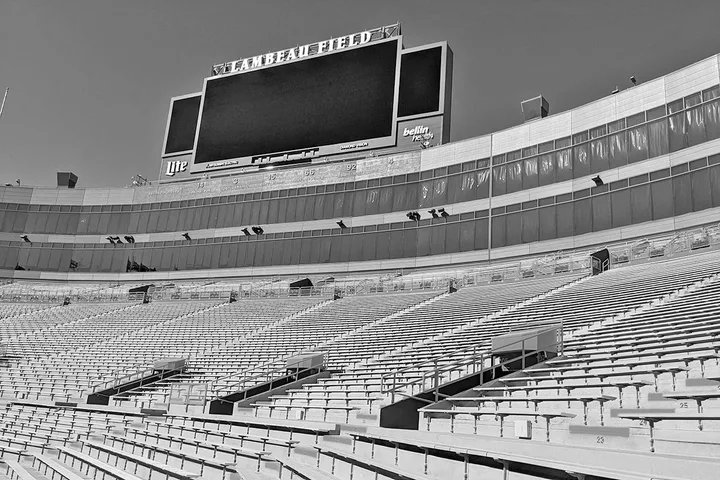
Corporate naming rights feel like a modern invention — stadiums plastered with bank logos, bowl games sponsored by credit card companies. But the Green Bay Packers got there over a century ago, and the deal that named them cost exactly $500. Earl “Curly” Lambeau, who cofounded the team in Wisconsin with George Whitney Calhoun, went to his employer for startup cash. The Indian Packing Company handed over the money for uniforms and equipment, threw in use of their practice field, and asked only that Lambeau name the team after them. Done.
The Packers celebrated their centennial in 2019. The Indian Packing Company lasted two more years after the deal was struck, absorbed in 1921 by the Acme Packing Company — whose name briefly appeared on team jerseys before fading away entirely. For context on what Lambeau gave away: SoFi recently paid $400 million for the naming rights to the Los Angeles Rams’ stadium. The Packers gave theirs up for five hundred dollars and a field in Green Bay.
The Hockey Team That Named Itself After a Song
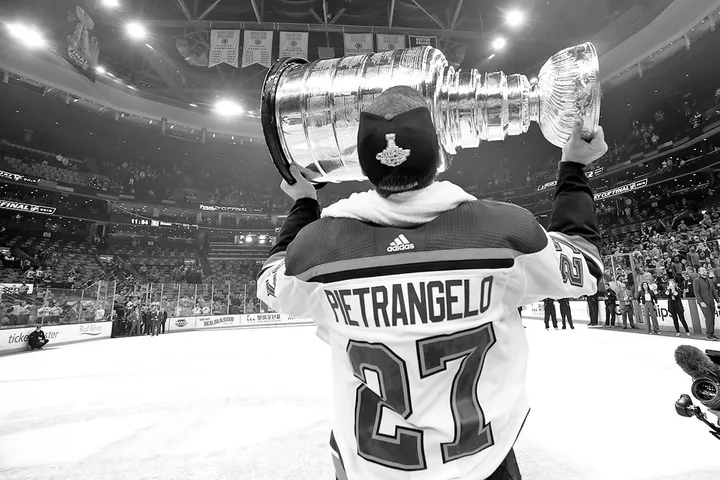
Most sports franchises name themselves after predators, local landmarks, or vague concepts of toughness. The St. Louis Blues went a different direction entirely. Owner Sid Salomon Jr. named his expansion hockey team after a W.C. Handy composition from 1914 — one of the most recorded songs in American music history, with versions by Louis Armstrong, Bessie Smith, Bing Crosby, and Dizzy Gillespie, among hundreds of others.
Salomon’s reasoning was direct: “No matter where you go in town there’s singing. That’s the spirit of St. Louis.” The Blues were a genuine anomaly as an expansion team — they reached the Stanley Cup Finals in 1968, 1969, and 1970. They were swept all three times. It took another 49 years before they finally won it, in 2018.
“No matter where you go in town there’s singing. That’s the spirit of St. Louis.”
Brooklyn’s Most Dangerous Pastime
The Los Angeles Dodgers have a name that belongs to another city entirely. The franchise started in Brooklyn in 1883, going by the Grays and later the Bridegrooms before sportswriters in 1895 started calling them something more vivid: the Trolley Dodgers. Electric streetcars had recently taken over Brooklyn’s streets, and avoiding them had become a genuine survival skill for the borough’s residents.
This wasn’t whimsy. Historian Joseph P. Sullivan wrote that the electric trolley “terrified many New Yorkers” — it moved far faster than horse-drawn cars and caused serious accidents, frequently killing children in Brooklyn. Dodging them was real, daily, and dangerous. The team officially adopted the name in 1932, then carried it west when they relocated to Los Angeles in 1958. The irony isn’t subtle: Los Angeles is one of the least walkable, most car-dependent cities in the country. Nobody there is dodging trolleys.
The Race Car That Inspired a Basketball Franchise
When Indianapolis got its NBA team in 1967, the connection to the city’s most famous institution was almost obligatory. The Indy 500 has run annually since 1911 and bills itself as the Greatest Spectacle in Racing. Among its oldest traditions is the pace car — a vehicle that leads the field at reduced speed before the start and returns during caution periods when the track needs to be cleared.
The pace car role carries real prestige. Manufacturers compete for the assignment because the car gets seen by millions of viewers worldwide. For the new basketball franchise, the reference did double duty: it honored the city’s identity and conjured associations with speed. The Pacers have played in Indianapolis ever since, and the Indy 500 still runs every May, the pace car still circling the track ahead of the field.
Gold Rush Ghosts and the Golden State
California is called the Golden State for a reason, and that reason is 1849. The gold rush that began the year before brought roughly 300,000 people flooding into California over seven years, transforming a sparsely populated territory into a destination. The prospectors who arrived at the peak became known as forty-niners — the number referring to the year, not a jersey.
San Francisco’s first major professional sports franchise, formed in 1946, took the name as a direct nod to that history. The city was the epicenter of the gold rush era; naming the team after the prospectors who built it made straightforward sense. Seventeen years later, the Philadelphia 76ers took the same approach, naming themselves after 1776 — the year the Declaration of Independence was signed. Sports teams, it turns out, have been raiding history books for branding material for a very long time.