The Wildest Ways Animals Avoid Getting Eaten Alive
The Frog That Turns Into a Block of Ice
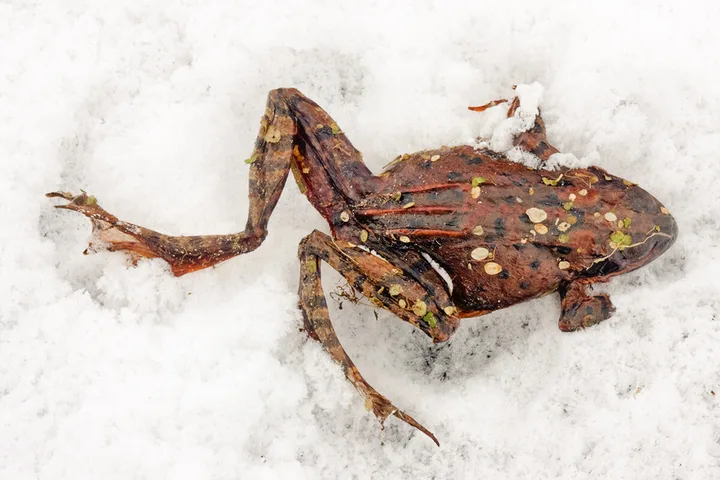
Most animals treat winter as a problem to be solved by leaving, sleeping, or growing thicker fur. Wood frogs, found across the boreal forests of Alaska and Canada, have a stranger answer: they freeze solid. Not metaphorically. Their hearts stop. Their brains go dark. Their eyes turn white as the lenses ice over.
The trick is glucose. Before the cold sets in, wood frogs flood their tissues with sugar that slows the formation of ice crystals — without it, those crystals would shred cells from the inside out. Up to 70% of their body water converts to extracellular ice. They hold that state for as long as eight months. When spring arrives, they thaw, hop off, and get on with things as if nothing happened.
The Sea Cucumber’s Nuclear Option
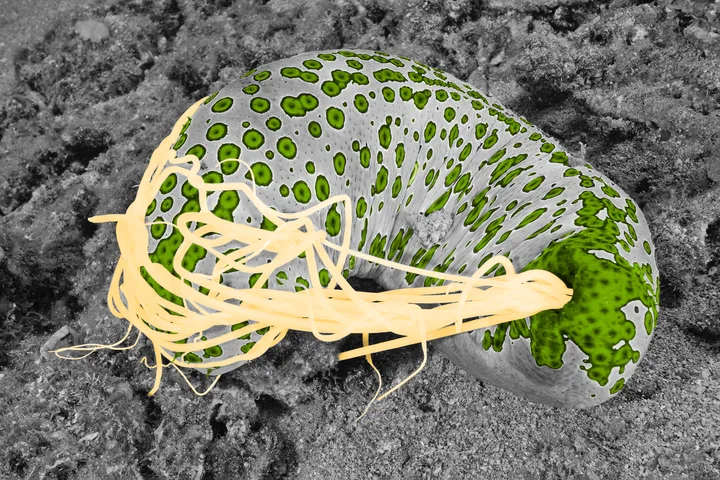
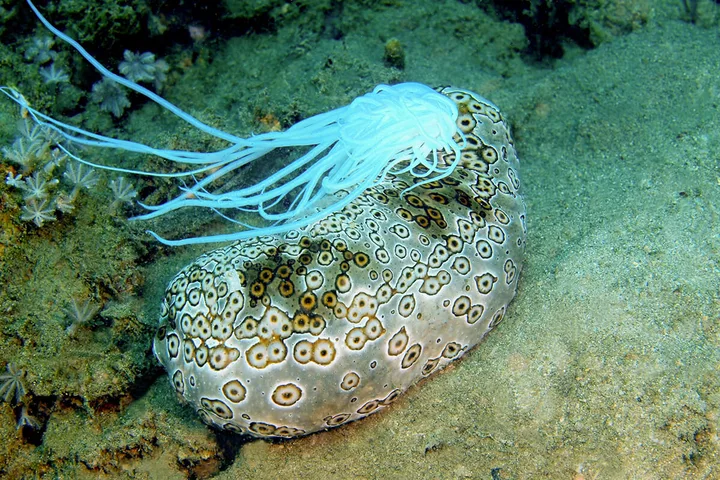
The sea cucumber is not built for speed. It can’t bite, sting, or run. When a predator closes in, it does something that makes most animals seem timid by comparison: it turns itself inside out. Literally. The sea cucumber contracts its muscles, forces its sticky internal organs through its anus, and dumps them directly in the predator’s path.
The expelled organs can blind or immobilize an attacker long enough for the sea cucumber to slip away. What sounds like a fatal sacrifice is actually a calculated gamble. The sea cucumber regrows its organs within a few weeks. Lose your guts today; have new ones by next month.
The Fish That Produces an Ocean of Slime
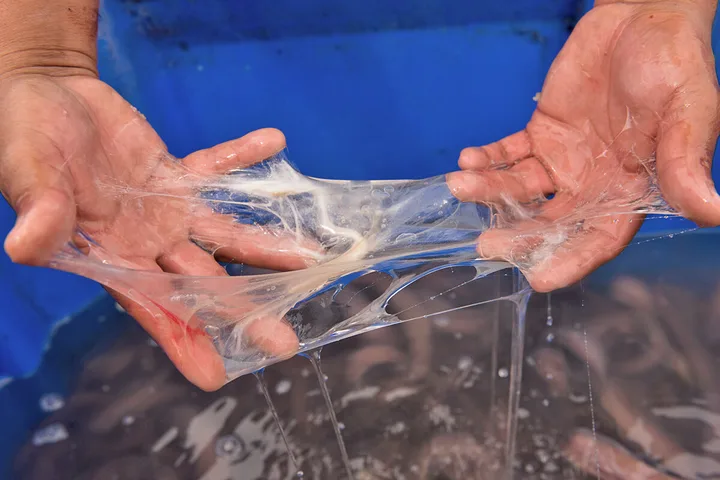
Hagfish look like something nightmares outsource their work to. These jawless, eel-shaped bottom-dwellers have existed for 300 million years, which tells you something about the effectiveness of their defense strategy. When threatened, they release slime from specialized glands along their bodies — slime that hits the water and expands almost instantaneously into a suffocating, gelatinous mass capable of clogging a predator’s gills and drowning it in goo.
One hagfish can produce several liters of the stuff in seconds. The catch: they can trap themselves in it. Their solution is as strange as their slime. They tie a literal knot in their own tail and pass it forward along the body, squeegeeing the goop off as they go. Evolution, when pressed, gets creative.
The Lizard That Shoots Blood From Its Eyes
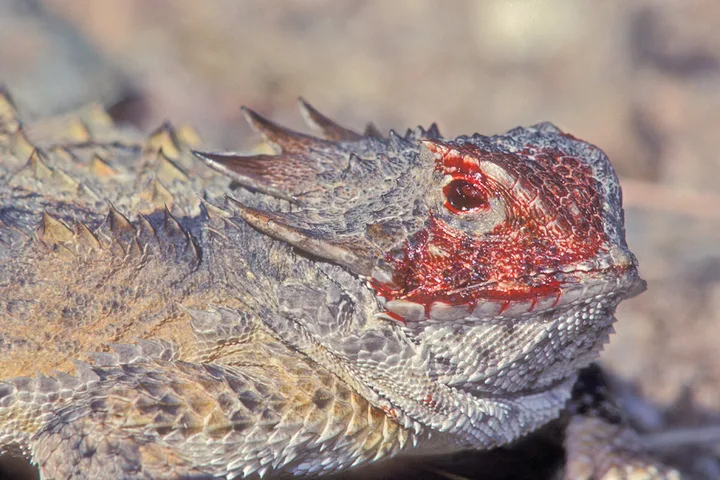
The Texas horned lizard already has camouflage, sharp cranial horns, and the ability to flatten its body like a dinner plate. That should be enough. When a predator gets too close, the lizard restricts blood flow leaving its head, builds the pressure until the vessels in its eyelids burst, and shoots a stream of blood up to five feet away.
The blood is laced with noxious chemicals that taste repulsive to dogs and cats specifically. A coyote gets a face full of foul fluid and learns fast. The lizard can repeat this several times in quick succession if the first shot doesn’t discourage the threat, and loses only a small percentage of its blood each time. The whole thing sounds catastrophic. It leaves the lizard no worse for wear.
The Opossum Can’t Help Playing Dead
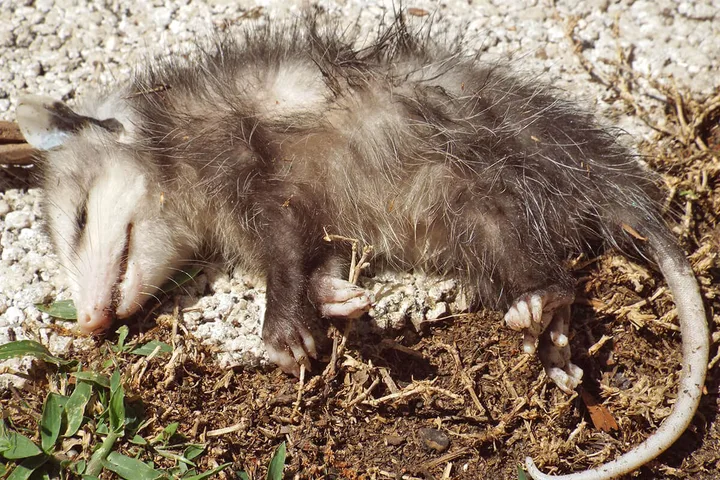
Playing possum implies a conscious performance. The reality is stranger. When an opossum faces extreme fear — a dog, a fox, a bobcat — its nervous system simply shuts the animal down. It collapses involuntarily. Lips pull back, it drools, its body goes slack, and it begins emitting a smell that mimics rotting flesh. The opossum has no say in any of this, including when it snaps out of it.
Many predators are wired to target moving prey and avoid decomposing carcasses that might carry disease. The opossum exploits that wiring without trying to. It lies there — sometimes for hours — until its system resets and it wanders off. A survival mechanism driven entirely by the animal’s own involuntary terror, and it works remarkably well.
The Cutest Venomous Mammal You’ve Never Feared
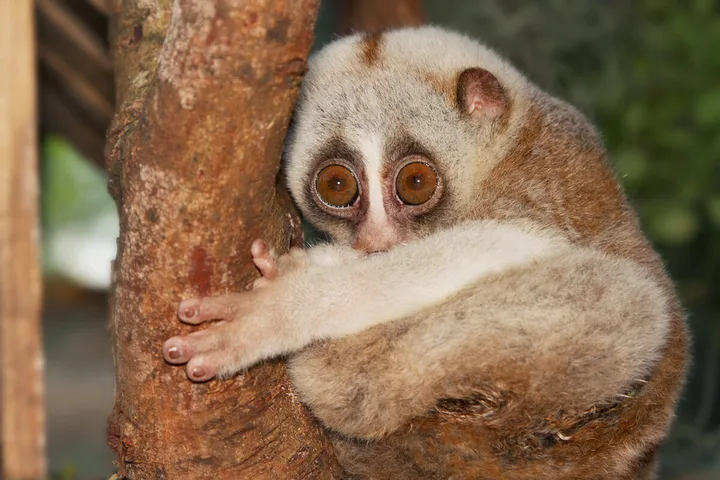
The slow loris looks like a stuffed animal someone brought to life. Round eyes, soft fur, tiny hands wrapped around a branch. It is also the only venomous primate on Earth, a fact that tends to reframe the cuteness somewhat.
The loris secretes a toxic compound from glands inside its elbows. When threatened, it licks those glands and mixes the secretion with saliva, activating the venom. A bite can trigger anaphylactic shock in predators. Strikingly, most documented loris bites are territorial, directed at other lorises competing for space. The animal that looks most huggable on the internet uses its venom primarily on members of its own kind.
The Octopus That Becomes Something Else Entirely
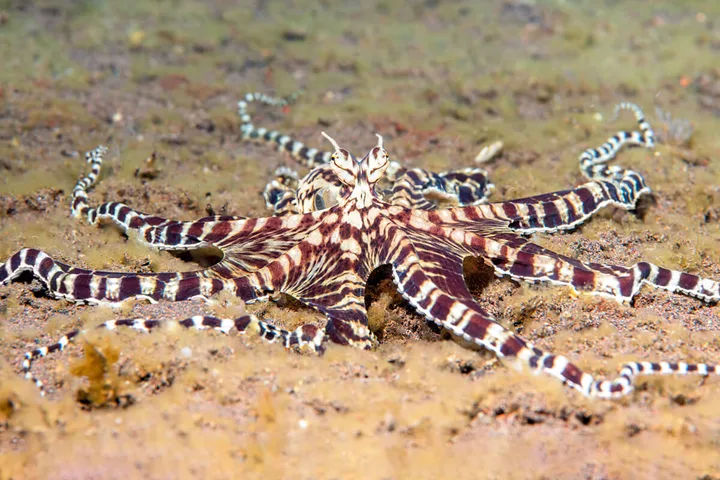
Plenty of animals use camouflage. The mimic octopus does something qualitatively different. It impersonates specific species — not just blending into the background but actively replicating the shape, color, and movement of more than 15 marine animals. Lionfish. Sea snakes. Sole. Each impression chosen based on the predator at hand.
When a fish-eating predator approaches, the mimic octopus flattens and undulates its arms to become a sole. When a snake-fearing species gets close, it trails two arms behind in the pattern of a banded sea snake. It reads the threat and selects the costume. That’s not instinct — that’s something closer to reasoning. In a kingdom full of strange survival strategies, the mimic octopus might be the only one that actually thinks about what it’s doing.