The Cancelled Prime Video Series You Must Watch Before Neuromancer Drops

The Prime Video Show Nobody Watched But Everyone Should
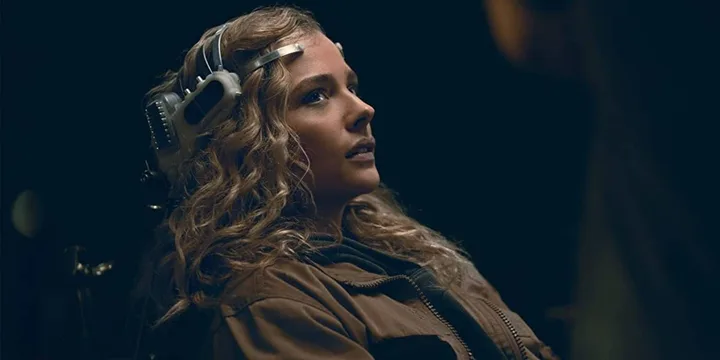
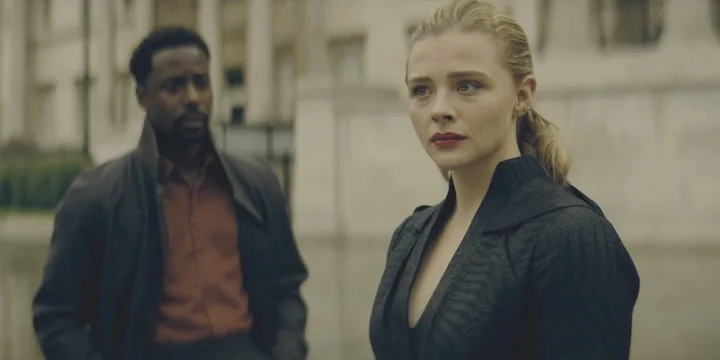
The Peripheral ran for exactly one season on Prime Video. Eight episodes, a cliffhanger ending, then silence. Chloë Grace Moretz plays Flynne Fisher, a sharp young woman in a hollowed-out near-future American south who starts moonlighting as a beta tester for what she thinks is a high-end VR game. The twist lands hard: she’s not playing a game. She’s reaching across time into an actual future — and the people she’s been killing are real.
Jack Reynor plays her brother Burton, a vet with military-grade neural implants, and the two of them quickly become targets of a future government that would rather erase them than let the secret get out. It’s the kind of premise that sounds deranged on paper and completely gripping on screen.
Gibson’s World, Adapted With Nerve
Both The Peripheral and the upcoming Neuromancer series share the same source: William Gibson, the author who essentially invented cyberpunk. The Peripheral was published in 2014, thirty years after Neuromancer landed on shelves and rewired science fiction permanently. What Gibson does that most sci-fi writers can’t match is texture. His worlds feel used, broken-in, lived in. The show didn’t just adapt the plot; it absorbed that quality — the rust-belt decay of Flynne’s timeline set against the sleek, depopulated London of the far future.
The numbers backed it up: 79% from critics on Rotten Tomatoes, an 85% audience score, a 7.5 on IMDb. Not a cultural juggernaut, but a genuine quality series. Prime Video renewed it for a second season.
The Strikes Took It Out
Then 2023 happened. The SAG-AFTRA and Writers Guild strikes paused production across the industry, and when the dust settled, The Peripheral was gone. Officially cancelled in August 2023, it became one of the more bitter casualties of that year’s labor chaos. Not killed by bad ratings or a creative collapse. Just collateral damage.
That’s what stings. The show had more story to tell. Gibson’s 2014 novel was followed by Agency in 2020, which deepens the same timeline-hopping world. A second season was planned. Now it’s a finished story with an unfinished ending — the worst kind of TV tragedy.
The Novel That Broke Hollywood for Forty Years
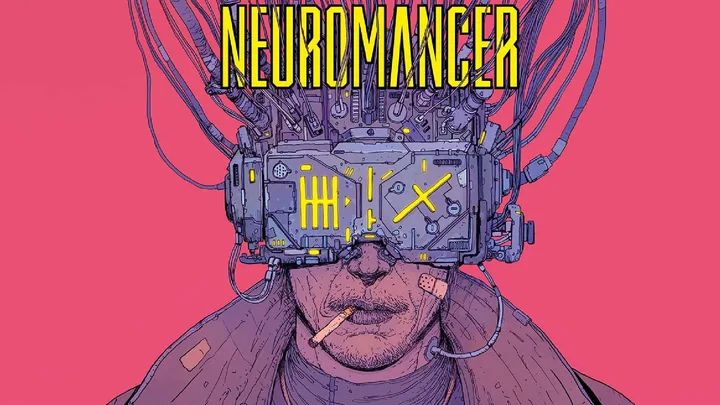
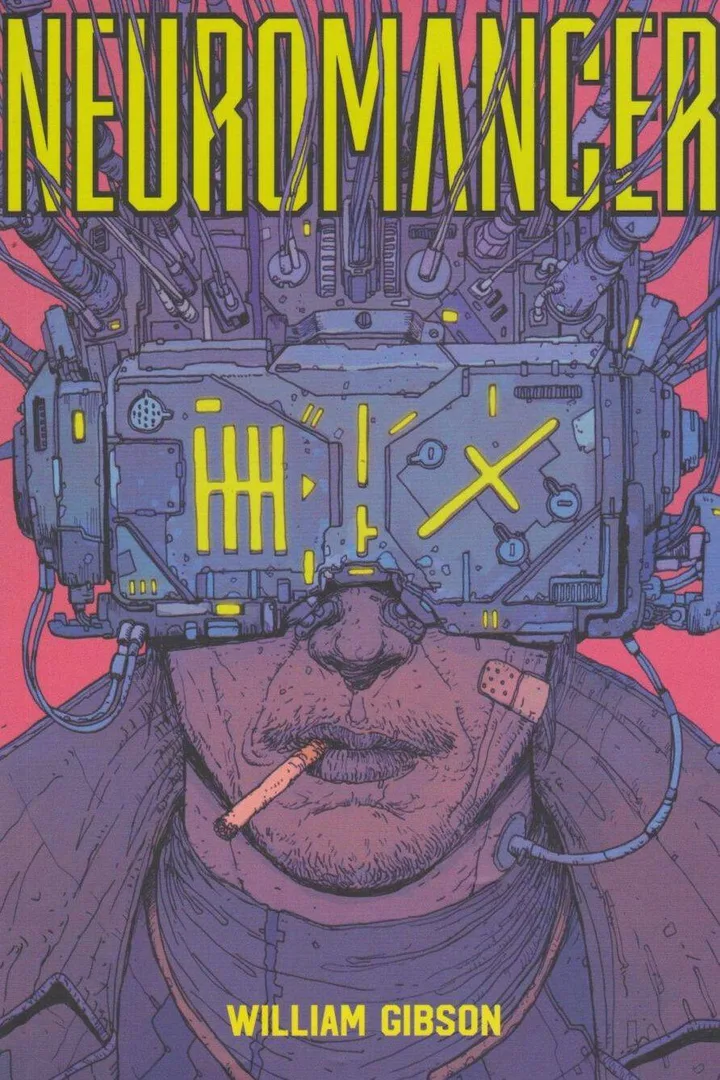
Neuromancer is a different beast entirely. Gibson published it in 1984 and it swept the Hugo, Nebula, and Philip K. Dick Awards in the same year — a clean sweep that’s never been repeated. The novel follows Henry Case, a burned-out console cowboy hired for one last job in a future Tokyo underworld. It coined the word “cyberspace.” It built the conceptual scaffolding that The Matrix would eventually turn into a blockbuster two decades later.
For years, Hollywood tried to adapt it and failed. The problem isn’t the plot — it’s the atmosphere. Neuromancer is as much feeling as narrative, a novel you sense before you fully understand it. Getting that on screen requires a showrunner willing to trust the weirdness rather than sand it smooth.
Why Apple TV Might Actually Pull This Off
The series lands at Apple TV+ with Graham Roland as showrunner, J.D. Dillard directing, and Callum Turner as Henry Case. Apple has already proven it can carry dense, ambitious sci-fi — Foundation required building an entire galactic civilization from scratch, and For All Mankind has delivered some of the sharpest alternate-history television made anywhere. The platform has a track record.
Neuromancer presents one specific visual challenge: cyberspace. Gibson imagined it as a three-dimensional grid of light and data, a shared hallucination millions of users jack into simultaneously. Every previous attempt to render that — from the 1995 Johnny Mnemonic film to countless video games — has looked either dated or wrong. Get it right and you have an iconic visual language. Fumble it and the whole structure collapses.
One Novel, Potentially an Entire Franchise
If Neuromancer works, Apple has a franchise ready to build. The novel opens the Sprawl Trilogy; Count Zero followed in 1986, Mona Lisa Overdrive in 1988. Gibson also wrote a cluster of short fiction in the same universe — “Burning Chrome,” “New Rose Hotel,” and “Johnny Mnemonic,” which already got a Keanu Reeves adaptation in 1995 that’s more curiosity than classic. There’s enough material here for years of television, if the first entry earns it.
The Peripheral couldn’t complete its run. That failure has a specific ache — the feeling of watching something genuinely good get shut down before it earned its ending. Neuromancer now carries the weight of proving that Gibson’s dense, demanding worlds can hold a full series. The show is expected on Apple TV+ in 2026. The Peripheral is still streaming on Prime Video: eight episodes, no resolution, worth every minute.