Horses Can Smell Your Fear and Six Other Facts That Will Stun You
They Started as Something Much, Much Smaller
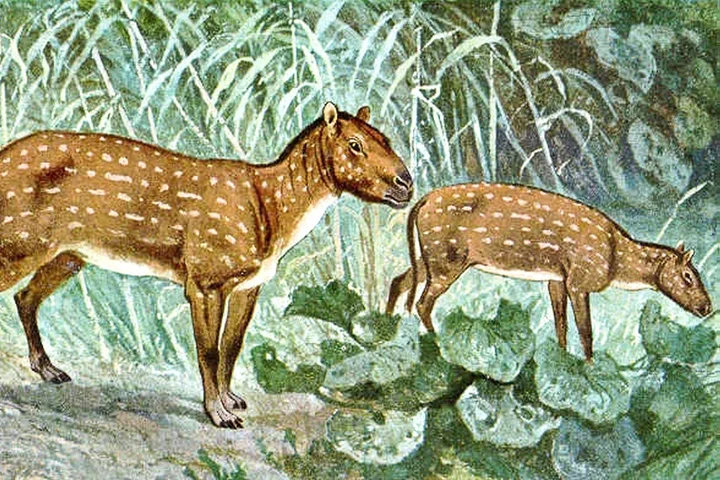
Fifty-six million years ago, the ancestor of every horse alive today was roughly the size of a border collie. Hyracotherium — sometimes called Eohippus — trotted through Eocene forests on four-toed front feet and three-toed back feet, browsing soft leaves rather than grazing tough grass. Nothing about it would suggest the animal it would eventually become.
Climate shifts slowly converted dense forest into open grassland, and these animals had to adapt or vanish. Over millions of years they grew taller, their side toes receded, their legs lengthened, and their teeth hardened for a rougher diet. The single hoof was the last piece to fall into place. Modern horses may still carry a faint trace of that ancient anatomy: the rough, callous-like patches on the inside of their legs — called chestnuts — are believed to be evolutionary remnants of the foot pads their multi-toed ancestors once walked on.
The Physics of Sleeping Standing Up
A horse can doze on its feet because of something called the stay apparatus — a precise interlocking system of tendons and ligaments that locks the major leg joints in place without any muscular effort. The horse hangs in its own skeleton, muscles soft, eyes half-closed. It costs the animal almost nothing.
But light dozing is not deep sleep. For genuine REM rest — the kind that consolidates memory and keeps an animal mentally healthy — horses have to lie down. They do lie down, just not for long. In the wild, sprawling on the ground meant exposure to predators. So evolution compressed their deep sleep into short, vulnerable windows and let standing naps carry the rest. Zebras and elephants use the same trick.
Read Their Age in Their Teeth
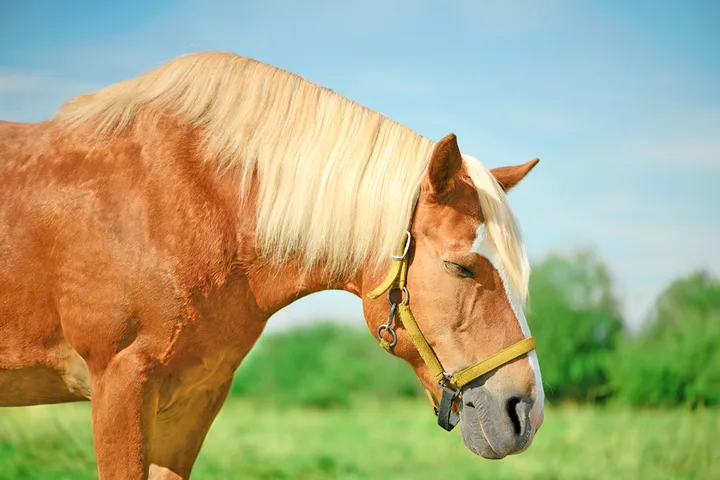
A horse’s teeth grow continuously through most of its life — slowly erupting from the jaw to compensate for the relentless grinding of tough, gritty grass. Ordinary teeth would be worn to nothing. Instead, new tooth keeps rising to meet the damage.
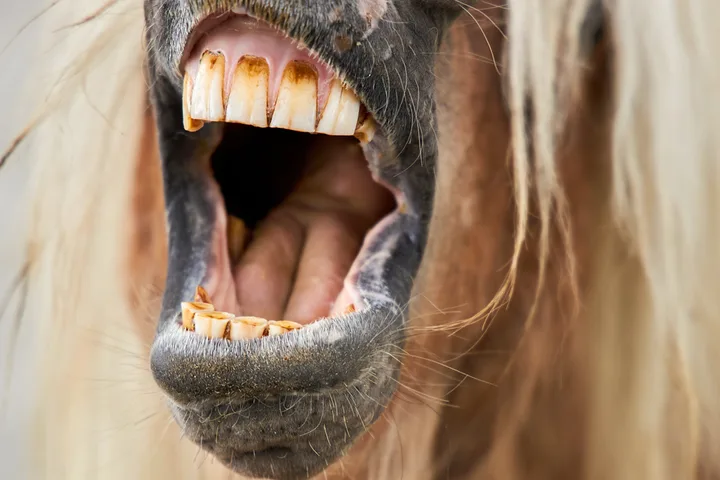
For centuries, experienced handlers could estimate a horse’s age simply by examining its mouth — the shape, angle, and surface wear all shift in predictable ways over time. Reliable enough to matter when breeding records were scarce or nonexistent. The growth does eventually stop, around age twelve. Since horses routinely live into their mid-twenties or beyond, they spend more than half their lives on a fixed set of teeth.
One Airway, No Exceptions
Horses cannot breathe through their mouths. A long soft palate seals the airway off from the mouth so completely that switching to mouth-breathing is not an option — not even at a full gallop. Instead, a horse’s breathing locks into a one-to-one ratio with its stride: one inhale, one exhale, one stride. The entire respiratory system is engineered around that rhythm.
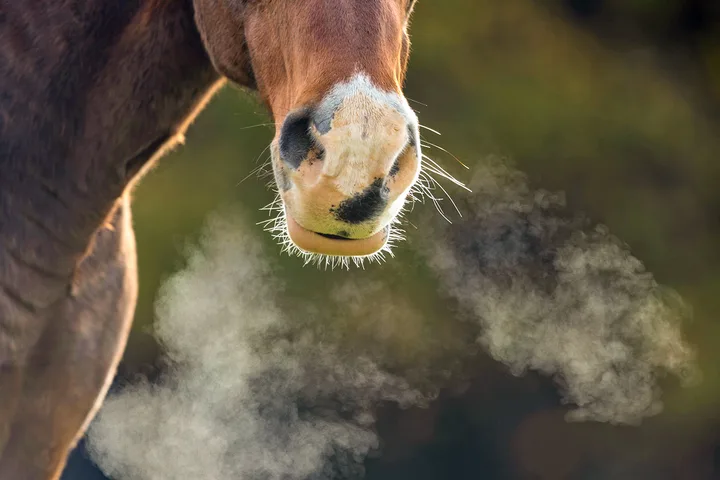
The same anatomy that makes them elite distance runners also means they cannot vomit or burp. The seal is that tight. Most of the time this is simply a biological quirk. When a horse ingests something toxic, though, it becomes a genuine medical emergency — colic, a catch-all term for gastrointestinal distress, is one of the leading causes of death in horses precisely because they have no release valve.
A Memory That Does Not Fade
Horses are not sentimental. Their long-term memory is. Research by Leanne Proops at the University of Portsmouth found that horses could recognize and respond differently to people they’d only seen in a photograph hours earlier. Show a horse a photo of someone looking angry, then introduce that person in real life, and the horse treats them with more wariness than if the photo had shown a smile.

That kind of memory was not designed for human convenience. It evolved to track predators, remember water sources, and maintain the complex social bonds of herd life. The fact that it also makes horses remarkable partners in training and therapy is an accidental bonus — one that humans have been exploiting, knowingly or not, for thousands of years.
Seventeen Faces, All of Them Meaningful
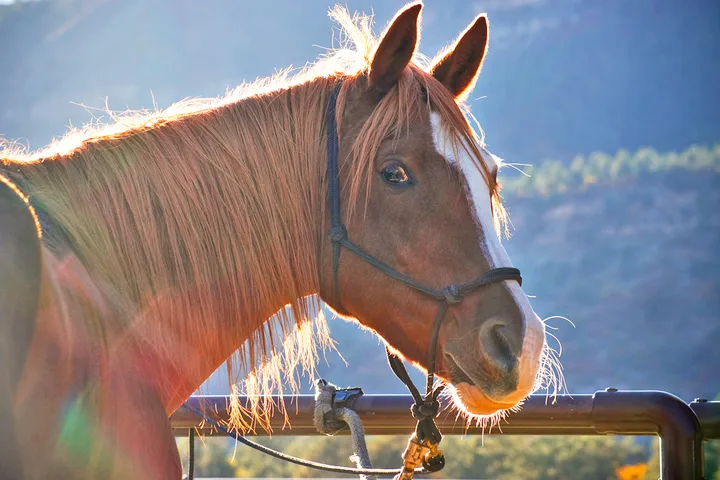
Scientists at the University of Sussex catalogued seventeen distinct facial movements in horses — more than chimpanzees manage (fifteen), and fewer than humans (around forty-six). Researchers identified expressions that parallel a human smile, an upper eyelid raise, and an eye-white increase, each one linked to a specific emotional state: submission, fear, stress. Pinned ears signal irritation. Flared nostrils at a standstill mean nervousness, not exertion.
The striking part is not that horses have a facial vocabulary. It is that they use it with humans, not just each other. Research shows horses process images of human expressions in different brain hemispheres depending on whether the expression is positive or negative — the same asymmetry found in social mammals that have evolved to track emotional intent in others.
They Can Smell Fear. That Is Not a Figure of Speech.
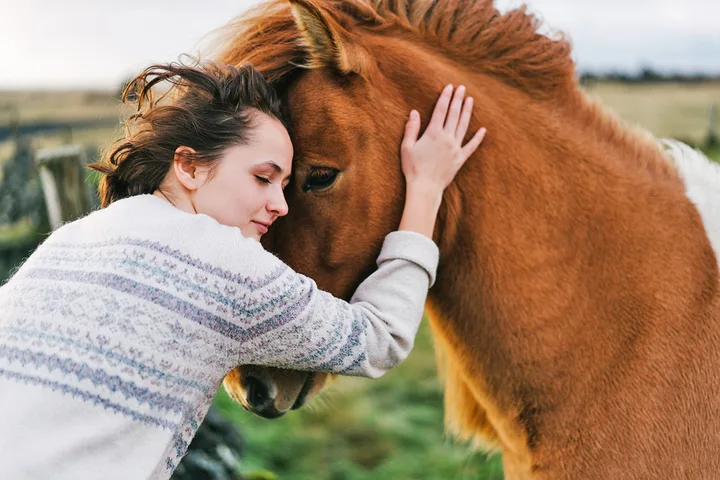
Horses can hear a human heartbeat from four feet away. Studies on heart-rate variability have shown they will synchronize their own heartbeat with a calm person’s pulse. They read posture, they read tone of voice, and they read sweat. When presented with perspiration collected from people in fear-inducing situations, horses showed measurably stronger stress responses than when given sweat from people who had been in calm, positive ones — with no visual or vocal cues at all.
This is why horses work in therapeutic settings. They are not responding to what you say you feel. They are responding to what your body actually signals. You cannot fake calm around a horse the way you might fake it with a person. Unsettled people make horses unsettled. Genuinely calm people seem to make horses calmer too. After six thousand years of shared history, that feedback loop still works exactly as it always did.