The Wildest Animal Sleep Habits You Never Knew Existed
Otters Hold Hands So They Don’t Drift Away
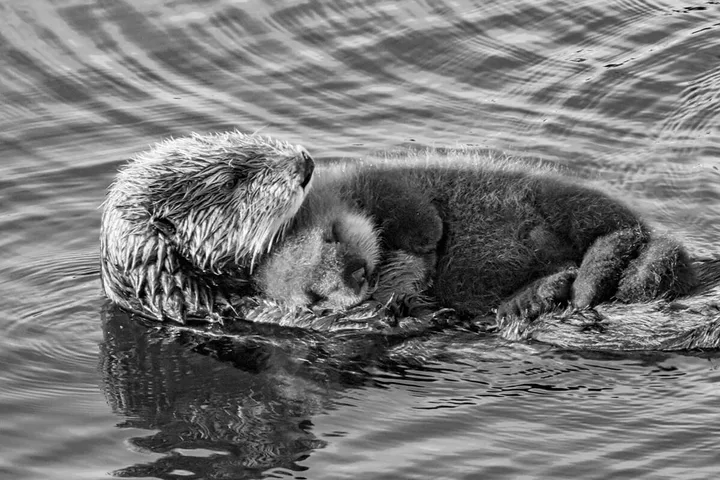
Otters sleep on their backs, floating on the water’s surface. Charming enough on its own — but they go further. They hold hands with each other during the night so they don’t drift apart. Sometimes they skip the hand-holding and wrap themselves in kelp instead, using it as a natural anchor.
The sight of a hundred otters bundled together in a floating seaweed raft sounds made up. It isn’t. These gatherings have been observed with as many as 100 animals. Mother otters use the same anchoring trick to keep newborn pups secured to their chests while sleeping, since pups can’t yet swim.
Great Apes Build Mattresses From Scratch Every Night
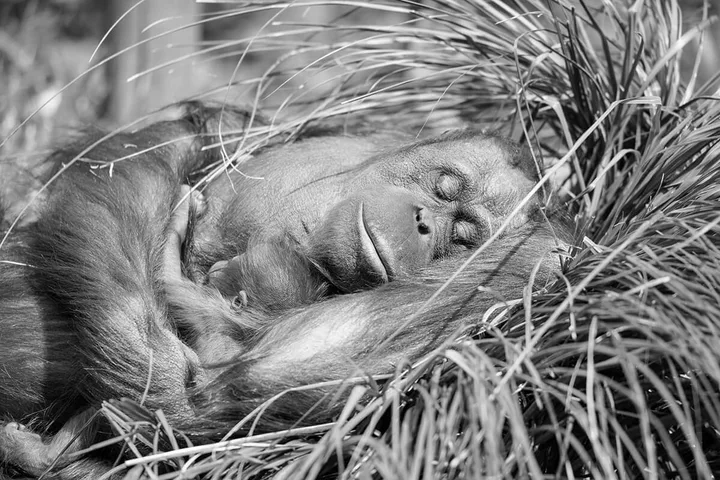
Humans aren’t the only primates who refuse to sleep on the floor. Orangutans — along with other great apes — construct elaborate sleeping platforms from bent and broken branches, then sleep deeply on them, whether in the treetops or on the ground below.
Young orangutans start practicing nest-building at around six months old. They’re bad at it for years. By age three or four, they’ve got it figured out. Why bother? Researchers suspect the original function was to keep sleeping apes from tumbling out of trees. Whether that’s still the driving reason or just deep evolutionary habit, they haven’t stopped.
Bats Are Airborne Before They’ve Finished Waking Up
Brown bats have a reputation as world-class sleepers — nearly 20 hours a day, some sources claim. That figure traces back to a single lab study from 1969, conducted under conditions that barely resembled a bat’s actual life. Take it with a grain of salt. What isn’t in dispute is the upside-down part.
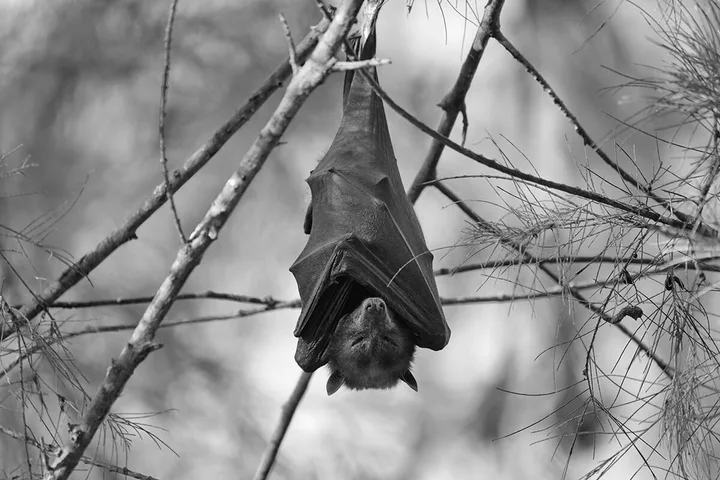
Bats hang from cave ceilings and tree branches via specialized tendons in their feet — tendons that grip tight without any muscular effort, keeping the animal locked in place while fully relaxed. The real genius of that position: bats can’t launch from flat ground the way birds can. They need gravity to take off. Hanging upside down is their pre-flight stance. Attack one mid-sleep and it drops — already airborne before it’s finished waking up.
One species, Wahlberg’s epauletted fruit bat, goes even further with unihemispheric sleep: half the brain shuts down while the other stays alert. They’re the only non-marine mammal confirmed to do this. Dolphins, porpoises, and a surprising number of birds — including chickens — use the same trick.
Horses Doze Standing Up — Until They Absolutely Have To Lie Down
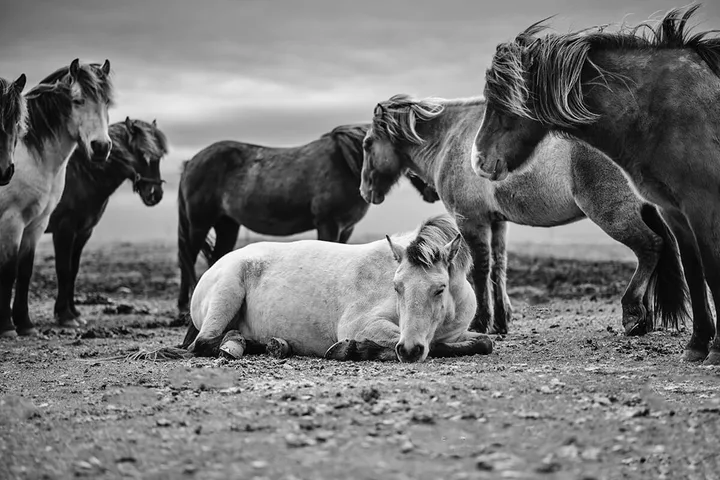
A horse in the middle of open plains has nowhere to hide. So they evolved a workaround: the stay apparatus, a locking system of tendons and ligaments that holds a horse upright without any muscular work. They can doze on all four hooves, ready to bolt the instant something moves in the grass. Zebras and elephants have their own versions of the same adaptation.
REM sleep is another matter. For deep sleep, horses have to lie down — and that’s where being a herd animal earns its keep. While some horses stretch out for REM, others stay upright and stand watch. Horses only need about 30 to 40 minutes of REM per night, and they can take it in short bursts instead of one long session.
Frigatebirds Nap in Ten-Second Bursts at Altitude
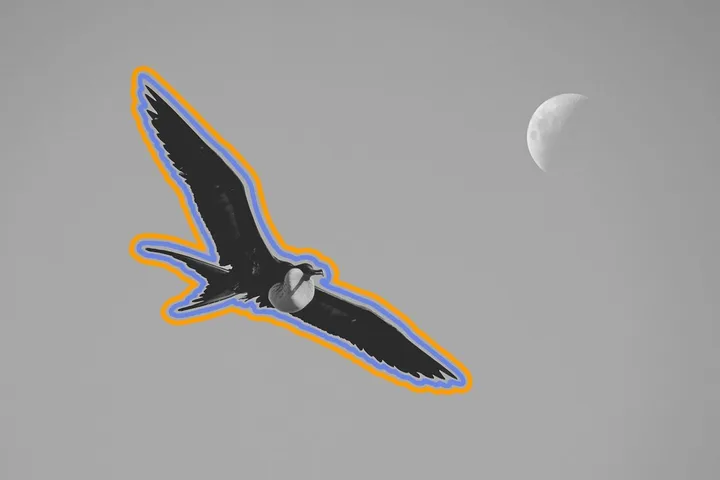
Scientists long assumed that birds capable of flying for weeks without landing must somehow sleep mid-air. The assumption made sense. The proof took longer. In 2018, researchers published findings in Nature Communications confirming that great frigatebirds — a species that can stay aloft for two solid months — do sleep while flying. In ten-second bursts. Totaling around 45 minutes per day.
EEG implants captured the data directly from the birds’ brains. They usually sleep after dark, often in the same half-brain mode used by dolphins and bats — one hemisphere resting, one active. The theory isn’t predator avoidance; there are no predators in open sky. The leading explanation is collision avoidance. When frigatebirds finally land, they sleep with both hemispheres at once, for much longer stretches. Clearly making up for lost time.
The Snail That Slept for Four Years Inside a Museum
Desert snails don’t hibernate — they estivate. Same concept, different season. While land snails go dormant through winter under rocks and stones, desert snails shut down through summer, sealing themselves inside their shells to outlast the heat and drought. These dormant periods can run extraordinarily long.
In 1846, a British Museum worker found what appeared to be a dead Egyptian land snail and pinned it to an identification card. It sat there for four years. Then staff noticed slime trails on the card. They dropped the card in water. The snail crawled off.
That snail had been dormant for four years — and walked away without apparent damage.
Sleep, as animals keep demonstrating, doesn’t have to look like anything humans would recognize.