Why Animal Patterns Are Far Stranger and Smarter Than They Look
Zebra Stripes Are Actually Bug Armor
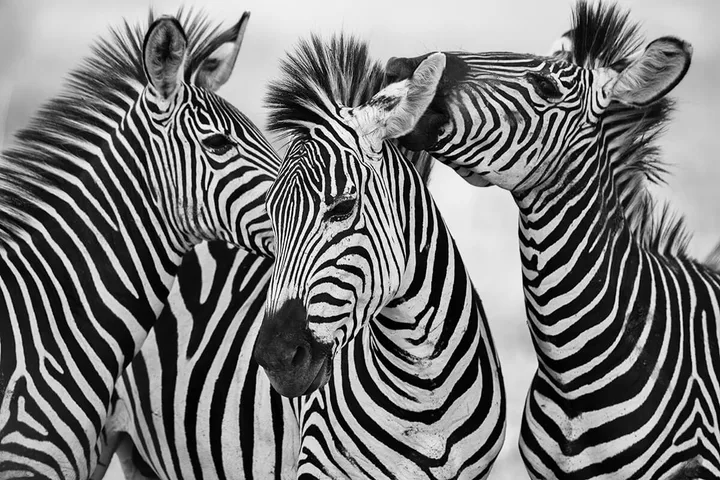
Scientists have debated zebra stripes for decades — thermoregulation, camouflage, social signaling. But one theory keeps holding up: those stripes are fly repellent. Researchers noticed that stripes are most pronounced on zebras living in African regions with the highest concentrations of horseflies and tsetse flies, the kind that carry fatal diseases in horses.
To test the idea, they dressed horses in zebra-striped coats and put them next to actual zebras. Flies buzzed around everything equally. But they almost never landed on the striped surfaces. When flies approached a zebra pattern, they seemed to lose their orientation — circling, confused, unable to commit to a landing spot. A coat can be camouflage and a force field at the same time.
Black Panthers Are Just Spotted Cats in Disguise
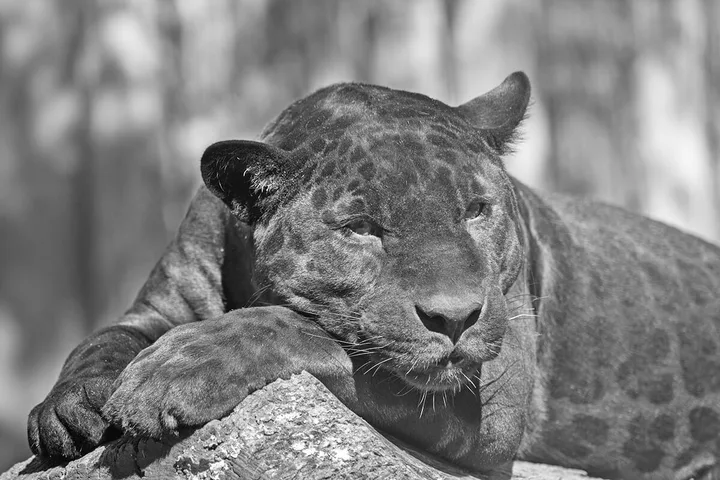
There’s no such thing as a black panther — not as a species, anyway. What people call black panthers are either black leopards (Africa and Asia) or black jaguars (Central and South America), animals whose dark coats are the result of excess melanin. Their spots didn’t disappear. They just went underground.
Look closely in strong light and you can sometimes pick them out. But shine infrared light on a black leopard and the animal transforms: the rosette pattern emerges in high contrast, like a black-and-white portrait of a cat with something to hide. Most of these animals live in denser, darker environments than their tawny relatives — which suggests the black coat earns its keep precisely where the spots can’t be seen anyway.
A Tiger’s Skin Is Striped All the Way Down
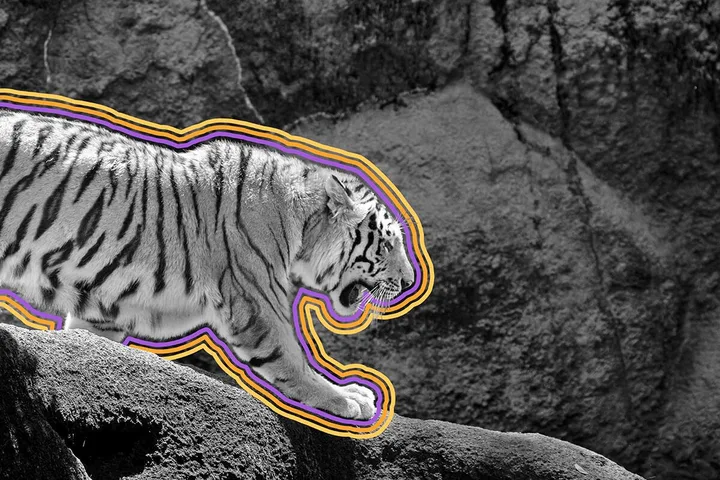
When a tiger needs surgery, veterinarians shave the fur. What they find underneath surprises people every time: the skin itself is striped, matching the coat almost perfectly, as though the pattern was inked directly into the animal. Each tiger’s stripe configuration is unique — no two are alike.
Tigers are apex predators, so hiding from threats isn’t the point. Hiding from prey is. Most of the deer and large animals tigers hunt are colorblind, and to those eyes, an orange-and-black tiger against forest vegetation registers as something greenish and broken up — not a predator. The stripes aren’t decoration. They’re a hunting tool painted onto every layer of the animal.
Ladybugs Have Way More Looks Than You Think
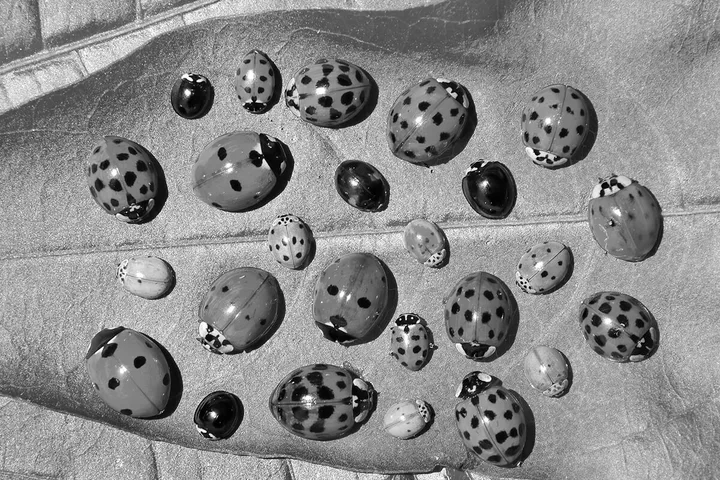
The classic red shell with black dots is just one option. Ladybugs — also called ladybirds or lady beetles depending on where you are — come in yellow, and even black, with wildly different spot arrangements. The yellow 22-spot ladybird, native to Europe, has exactly as many spots as its name promises. The Australian transverse ladybird runs a vertical black band down its center with wavy wing markings. North America’s three-banded lady beetle wears three thick black stripes edged in beige on each wing.
The iconic red-with-spots version is the one that ended up on children’s bedroom walls and birthday cards, which makes the rest of the family feel almost clandestine. Go looking for ladybugs and you’ll start seeing strangers.
Dalmatian Puppies Are Born All White
Every Dalmatian starts life as a blank canvas. Puppies are born white — occasionally with a patch or two — and their spots begin emerging over the first several weeks. By adulthood, each dog’s pattern is as individual as a fingerprint. No two Dalmatians carry the same configuration.
The breed became enormously popular after the 1996 live-action remake of 101 Dalmatians. Animal shelters paid for that popularity for years afterward. Dalmatians are working dogs — bred to run alongside carriages for miles — and families who adopted them on impulse found themselves overwhelmed by animals that needed far more than a daily walk around the block. The spots are beautiful. The energy is relentless.

Peacock Eye Spots Are Built Like Velcro
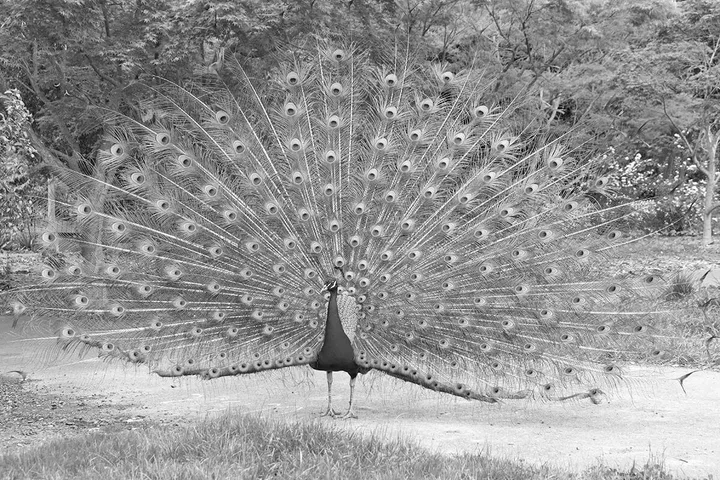
A peacock courting a female fans his tail and rattles the whole thing at roughly 25 vibrations per second. The feathers blur. The iridescent blues and greens become a shimmering wall of color. And through all of it, the circular eye spots near the top of each feather stay almost completely still.
That stillness is structural. The barbs that make up the eye-spot region are locked together — researchers describe it as Velcro-like — forming a section of feather far denser and stiffer than the rest. While everything around them trembles, the eyes hold steady. The contrast between motion and stillness makes the display more arresting, not less. The peacock figured out that stillness can be its own kind of theater.
Spots and Stripes Are One Gene Apart
For a long time, king cheetahs — which have thick stripes and large blotches across their backs — were classified as a separate species from ordinary spotted cheetahs. Eventually researchers established they were the same animal. The difference comes down to a single gene called Taqpep. When that gene carries a particular mutation, a cheetah’s individual spots merge and coalesce into stripes and larger markings. One gene. Two completely different-looking animals.
The same mutation operates in domestic cats. The mackerel tabby, common across North America, has clean, narrow stripes. Cats carrying the Taqpep variant instead have the blotched tabby pattern — wider, messier swirls — and they’re more prevalent in Europe. Your blotchy tabby and a king cheetah are running the same genetic variation, separated by a few thousand miles and about 120 pounds.