Online Worlds That Vanished and Left Millions of Players With Nothing
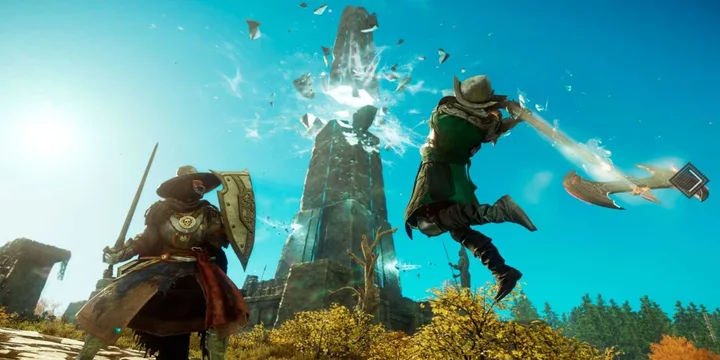
New World: Amazon’s Grand Experiment Ends
Amazon built New World like it had something to prove. Released for PC in 2021 and expanded to PS5 and Xbox Series X/S in 2024, it was the company’s bid to become a real force in gaming — not just a retailer selling other people’s discs. The launch buckled under its own weight. Servers collapsed from the player overload, confidence never recovered, and the counts cratered fast.
On January 31, 2027, the lights go out for good. The world of Aeternum — a fictional Atlantic island locked in a fictionalized Age of Exploration, where immortal settlers fight off supernatural horrors — disappears completely. Six years. That’s all it got.
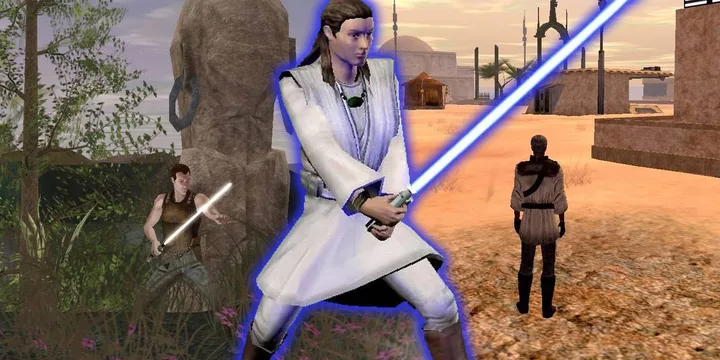
Star Wars Galaxies: The Universe That Actually Felt Real
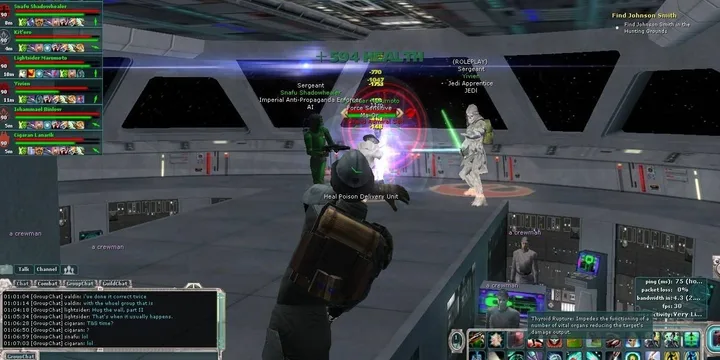
Before the franchise got scrubbed into something safe and corporate, there was Star Wars Galaxies. Released in 2003, it dropped players into a living galaxy populated by Luke Skywalker, Han Solo, and the grinding machinery of rebellion. You could host lightsaber duels in a cantina, dogfight TIE fighters in open space, build a character from nothing. Nothing before it felt so much like actually living in that universe.
Sony Online Entertainment pulled the plug in 2011. Eight years, then silence. Private servers still exist — a few hundred diehards keeping the lights on — but they’re quiet places now, more museum than game.
Firefall: The Jetpack Game Nobody Got to Finish
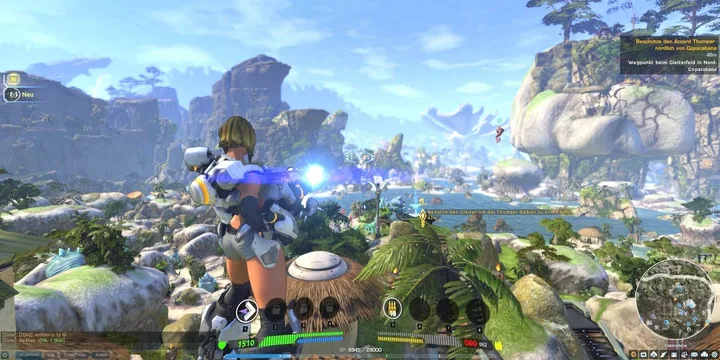
Firefall had a split personality that worked. On the ground, it played like a first-person shooter. Get airborne — on a jetpack or inside an aircraft — and the camera swung to third-person. Blend in RPG progression and power upgrades and you had something genuinely strange and promising. Red 5 Studios, led by Mark Kern of StarCraft fame, spent years chasing the right version of it.
Too many years. The game crawled through closed beta, open beta, and finally launched publicly in 2014. By 2017, interest had collapsed and the servers went dark. Three years of live service for a game that took nearly a decade to ship. It felt like a concept that had run out of runway before it could prove itself.
Babylon’s Fall: Eleven Months and Out
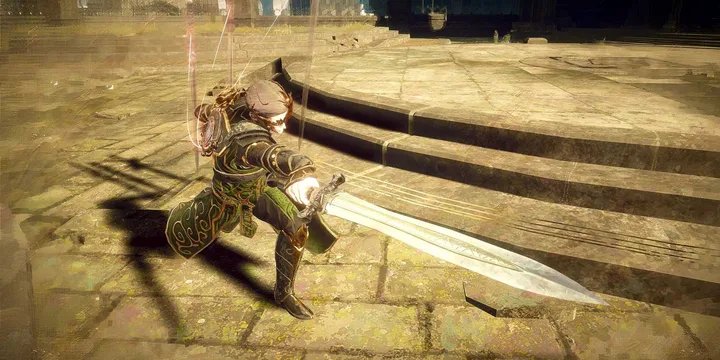
Babylon’s Fall wasn’t given much of a chance. Released March 3, 2022 for PC, PS4, and PS5, it was a fantasy action RPG from Square Enix — third-person hack-and-slash, two weapons at once, escaped convicts carving through supernatural opposition across three story episodes. Solid enough bones on paper.
Critics shrugged. Players stayed away. On February 27, 2023 — eleven months after launch — the servers closed. Less than a year. That’s one of the shortest live cycles any major studio release has ever endured.
Tabula Rasa: The MMO That Ended in Mutual Destruction
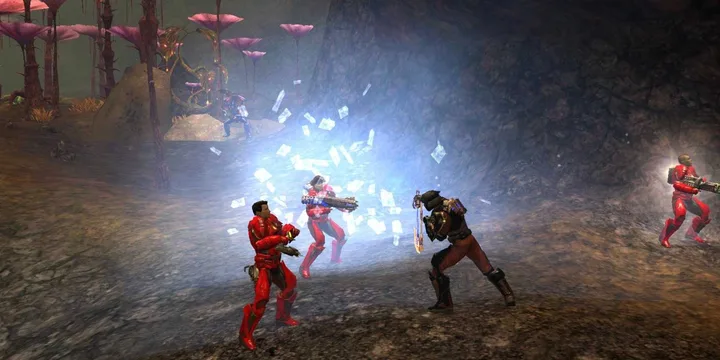
Richard Garriott made his name on the Ultima series — foundational stuff. Tabula Rasa was his swing at something harder-edged: a sci-fi MMORPG where humanity’s battered remnants fight an alien invasion that has nearly wiped out the species. It launched November 2, 2007, more action-heavy than anything Garriott had made before. Aliens could spawn anywhere, not just in designated zones. You had to stay sharp.
The shutdown came February 28, 2009, after the game had already gone free-to-play in a last-ditch bid to survive. When the final battle hit, both sides — humans and aliens — were annihilated completely. Total mutual destruction as the closing credits. Few MMOs have gone out with that kind of dramatic commitment.
MapleStory 2: The Sequel That Missed Its Window
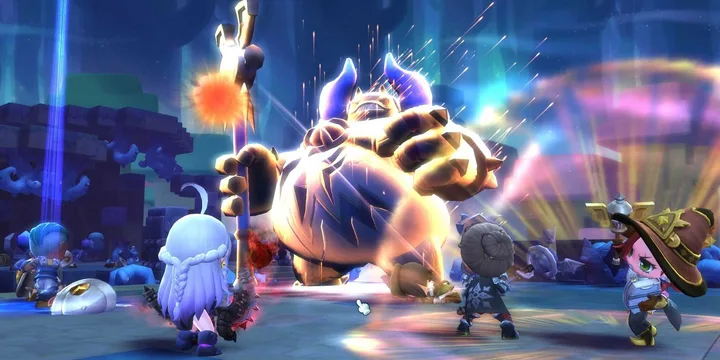
MapleStory, the 2003 anime-styled side-scroller, became the kind of game people carry with them for decades. MapleStory 2 tried to build on that goodwill while changing nearly everything: blocky Minecraft-and-Roblox aesthetics, casual gameplay loops, battle royale modes, paid cosmetics. Different DNA entirely.
It launched in South Korea in 2015 and arrived elsewhere years later, already late. The South Korean servers ran the longest, finally shutting down May 29, 2025. International players had lost access years before that. The original MapleStory still runs. The sequel doesn’t.
The Crew: The Shutdown That Sparked a War
The Crew launched December 2, 2014 across PC, PS4, Xbox 360, and Xbox One — a racing game built around a compressed, drivable map of the United States. Its story followed Alex Taylor, a driver framed for a crime, working undercover for the FBI inside underground motor clubs. The multiplayer let players race that same American sprawl together. Ubisoft made it always-online, even for single-player. That decision became the game’s death sentence.
After ten years, Ubisoft killed the servers in 2024. The game became unplayable overnight — no offline mode, no patch, nothing. The backlash was loud enough to birth the Stop Killing Games initiative, a consumer advocacy movement pushing publishers to guarantee games remain accessible after server shutdowns. Private servers have since emerged. But what the shutdown demonstrated was uglier: a game you purchase can be erased from your hands, completely, any time, for any reason.