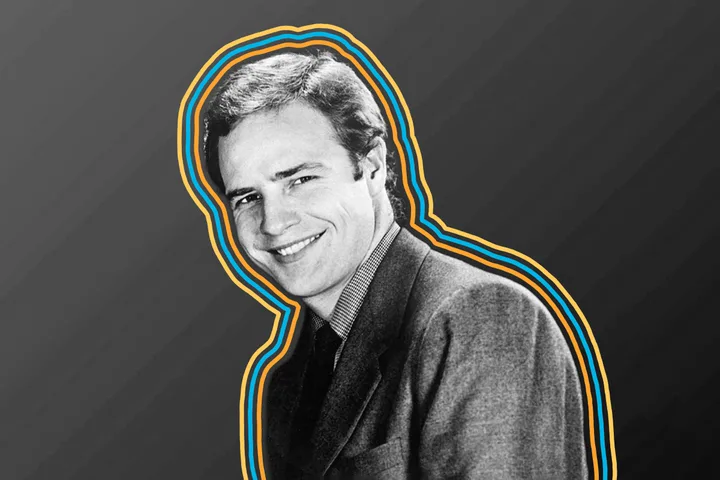
Ed Baldwin’s Last Breath Reveals the Two Characters Who Defined Everything

The Deathbed Scene Nobody Saw Coming
Ed Baldwin has survived the Cold War turning hot, Mars missions gone sideways, and decades of personal wreckage. In Season 5, Episode 3 of For All Mankind, titled “Home,” he finally runs out of time. The show lets him go slowly, and in his last conscious moments, it tells you exactly who he was.
He thinks of his Korean War buddy Shane. His son Shane. Then Karen. Then Gordo. Four names from across a lifetime — and two of them haven’t been on screen for years.

The Cameos That Earned Their Weight
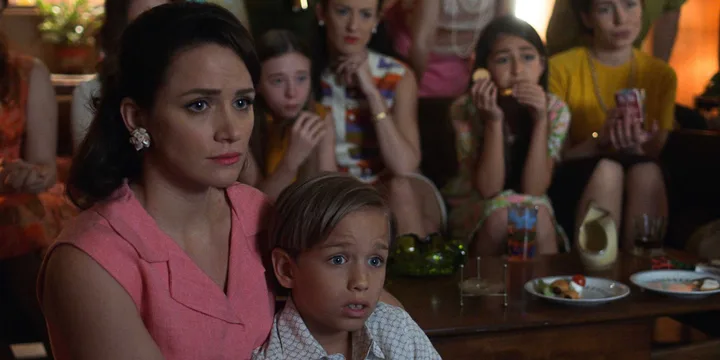
Shantel VanSanten and Michael Dorman return as brief flashback apparitions, and the show earns every second. Karen appears in a domestic scene, holding a toddler-age Shane while Ed departs for his first spaceflight. Warm, ordinary, already years gone. The last image Ed carries into death is Gordo beside him, both men seeing Earth from orbit for the very first time.
These aren’t sentimental flourishes. For All Mankind is making a direct argument: of every person Ed has known across five seasons and five fictional decades, these two are the ones his mind goes back to. They were there before the show began. They defined what came after.
Two People Who Were Genuinely Hard to Watch
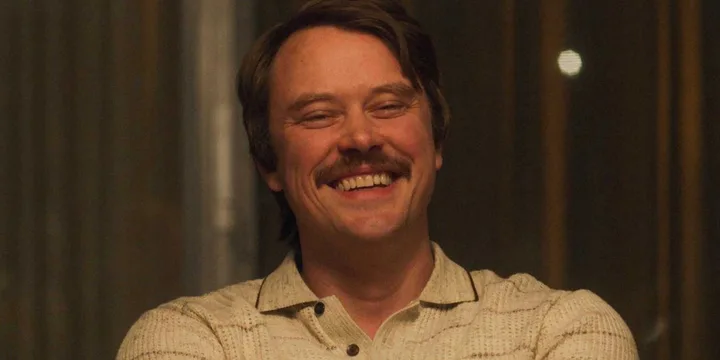
Gordo Stevens was not easy to root for, and the show never pretended otherwise. He cheated on Tracy with casual shamelessness, coasted on charm when accountability was due, and treated his marriage like an inconvenience he’d get around to eventually. Michael Dorman played the self-destruction with such specific gravity that you couldn’t stop watching, even when you wanted to.
Karen’s worst moment was arguably worse. The affair with Danny — Gordo’s own son, her dead child’s closest friend, a kid she’d helped raise — was the kind of choice that pulls the rug out from under everything. The show staged it unflinchingly. You understood exactly how she got there. That made it harder, not easier.
Deaths That Still Sting Seasons Later
Gordo and Tracy died on the lunar surface at the end of Season 2, radiation spreading through their suits while they tried to avert something larger. Brutal, specific, unglamorous. Karen died in the Season 3 finale beside Molly Cobb when a bomb tore through the Johnson Space Center — sudden, public, wasteful in the way real tragedy tends to be.
Both deaths hit the way they did because both characters had earned complicated redemption. Gordo went out a hero after years as something considerably less. Karen never quite got her peace. The show didn’t cushion that. You felt the incompleteness like a door swinging shut mid-sentence.
Without Karen and Gordo, Ed’s story would’ve been a closed loop — the same orbit, the same wreckage, repeated across decades with no one to pull him out of it.
The Architecture Everyone Else Was Built Around
What the deathbed scene confirms is something the earliest seasons demonstrated quietly: the political drama, the space race, the alternate-history machinery — those are backdrop. The real catastrophe was always domestic. A marriage disintegrating in a Houston suburb. Friendships crushed under the weight placed on them. Gordo and Tracy’s lunar sacrifice hits harder in retrospect precisely because of what came before it, the years of ordinary human failure the show refused to skip past.
Karen and Gordo carried that emotional load better than anyone else the show has introduced. VanSanten and Dorman found the duality in each character — the magnetic and the monstrous living inside the same person — and played both ends without flinching. Their ghosts, apparently, still do the same work. New episodes of For All Mankind premiere every Friday on Apple TV, with a sixth and final season already in development.