The Brutally Honest Guide to Getting Around Australia Without Going Broke
A Country That Eats Your Budget Alive
Australia is enormous in a way that doesn’t fully register until you’re staring at a map. Seven million square kilometers of desert, coast, and rainforest — and the cities are scattered around the edges like afterthoughts. Highway 1 rings the whole continent at 14,500 kilometers. Drive it with minimal stops and you’re looking at weeks. Do it properly, with actual time to look around? Three to six months, minimum. This is why the “grey nomads” — retirees in campervans who treat the country as a second retirement plan — are onto something the average two-week tourist completely misses.
For everyone else, the challenge is the same: vast distances, concentrated population, and a transport market with almost no competition. That last part is what kills budgets. Outside the busy eastern corridor between Melbourne and Brisbane, you will pay more than you expect, for less than you want. The trick is knowing which options are traps before you book anything.
Flying Is the Trap
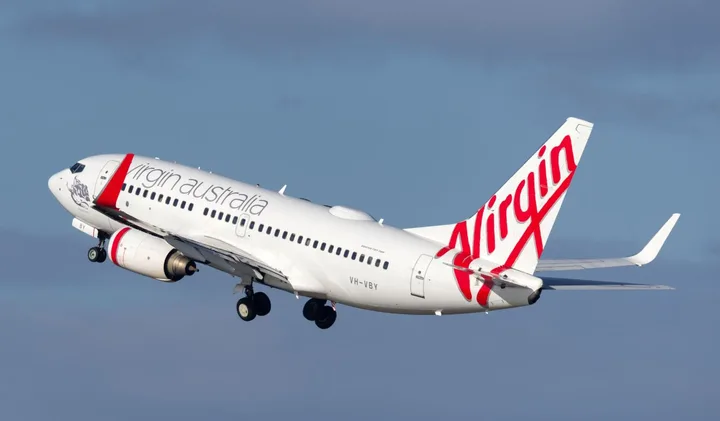
The domestic aviation market runs on two main players: Qantas (and its budget subsidiary Jetstar) and Virgin. That’s essentially it. Limited competition means prices stay stubbornly high. Sydney to Perth — a five-hour flight — costs at least 200 AUD one way, and 400 AUD is closer to the norm if you aren’t booking far ahead. Sydney to Melbourne, 90 minutes in the air, hovers around 90 AUD if you’re lucky and 150 AUD if you’re not.
Australians have a saying: it’s cheaper to fly to Bali than to cross their own country. They are not being dramatic. Unless you find a genuine sale or you’re genuinely strapped for time, domestic flights are the worst value on the continent. Skip them whenever you can.
The Bus Pass Nobody Tells You About
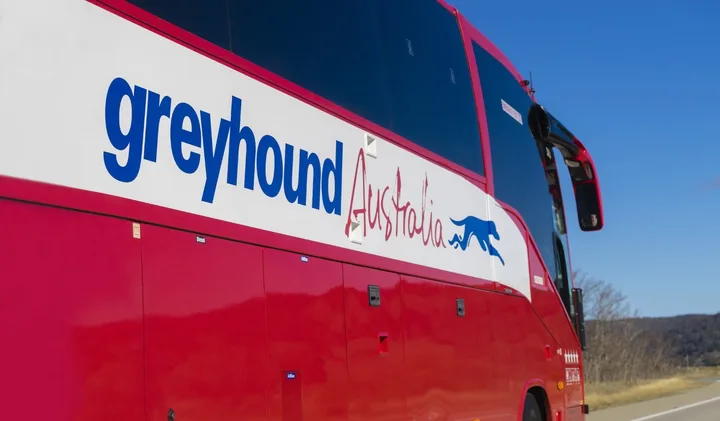
On the East Coast, the bus is your best friend. Greyhound Australia is the dominant carrier, with Premier Motor Service running parallel on the coastal route. Prices between the two are usually nearly identical. The real value, though, is in the passes. Greyhound’s Whimit Pass gives you unlimited travel across over 180 stops — in any direction, on any route — for a flat fee. A 30-day national pass runs around 696 AUD. A 15-day East Coast Whimit (Cairns to Melbourne only) starts at 319 AUD.
Do the math: a month-long pass at 696 AUD, spread across roughly ten trips at realistic travel pace, works out to about 70 AUD per journey. Most single tickets cost more than that. Premier also offers a hop-on/hop-off pass for 100–365 AUD, though it’s one-directional — useful if you’re methodically working your way down the coast rather than bouncing around.
One warning: the West Coast is a different story. Population thins out dramatically along Western Australia’s coastline, competition evaporates, and bus prices climb. On that side of the country, Transwa operates the routes, but flying can actually be cheaper. The math inverts out west.
Trains: Beautiful, Broken, Expensive
Rail travel in Australia looks good on paper and disappoints in practice. The eastern states have decent commuter networks, and Queensland Rail runs up the coast from Brisbane to Cairns. Trainlink covers New South Wales. But cross-country routes are sparse: one north-south line from Melbourne to Darwin, one east-west from Sydney to Perth. Some routes run once a week. That’s not a typo.
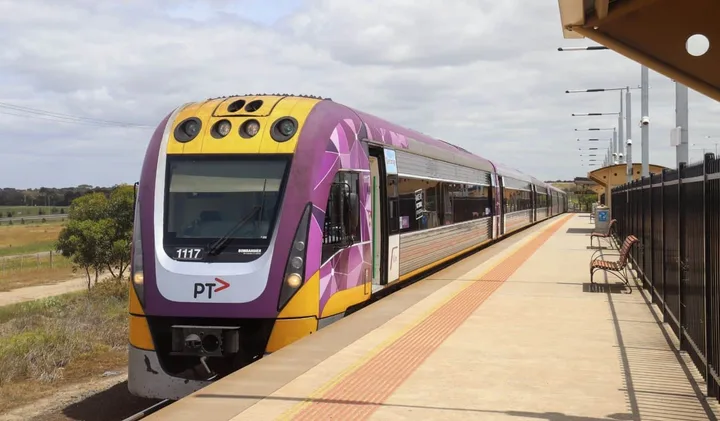
The scenic trains — The Ghan, the Indian Pacific, the Overland, the Great Southern — are genuinely spectacular, and Journey Beyond Rail operates them with serious style. Queensland Rail runs the Spirit of the Outback and the Spirit of Queensland. These are bucket-list experiences, not budget transport. Tickets book out months in advance and cost accordingly. The Sydney to Melbourne train clocks in at eleven hours; you can drive it in under nine.
Australia has no high-speed rail. Trains are slow, infrequent, poorly connected between regions, and expensive. Unless the scenic route is the point of the trip, the train is the wrong call.
The Van Life Equation
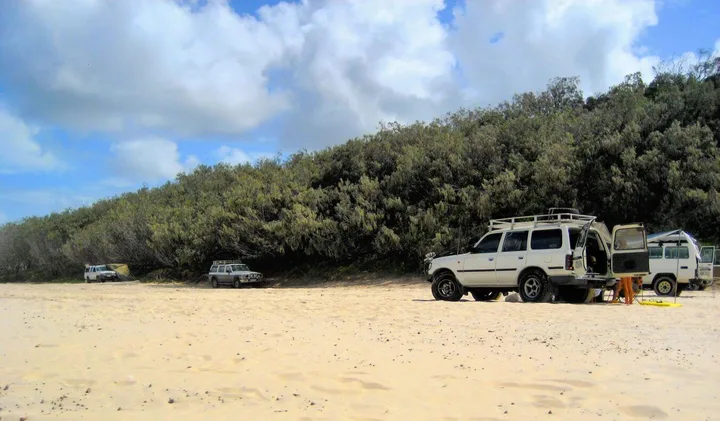
A campervan rental solves two problems at once: getting around and having somewhere to sleep. That’s the core appeal, and it’s why this option punches above its weight on a budget sheet. Rentals start around 70 AUD per day through operators like Spaceships, Traveller’s Autobarn, and Wicked Campers. Camperdays lets you compare prices across the lot.
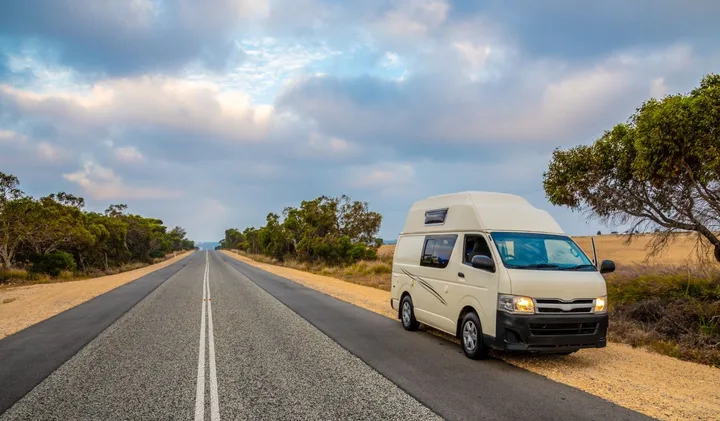
Australia is dense with free and low-cost campsites. A campsite costs roughly half what a hostel dorm bed does — sometimes less. Add that saving to the transport cost and the van often wins on pure economics, especially for trips longer than two weeks. If you’d rather not sleep in the van, rent a regular car and camp anyway. Same logic applies.
Share Bus takes a different approach: it’s not a tour and it’s not a standard rental. You sign up for set dates, share the bus with up to twelve other travelers, and run the trip yourselves. Rentals run 10–23 days and cost 774–1,680 AUD per person depending on duration. From October to April they cover the southern half of the country, Tasmania included; April to October shifts north. It suits people who want company without a hand-holding itinerary.
Buy a Car, Sell It Before You Leave
For longer trips, buying a used car or van beats renting on cost almost every time. Departing backpackers sell cheap — check Gumtree, hostel message boards, and the Facebook group Backpacker Campervans for Sale Australia. Someone who flew in three months ago and needs to catch a flight home in 48 hours is highly motivated to deal.
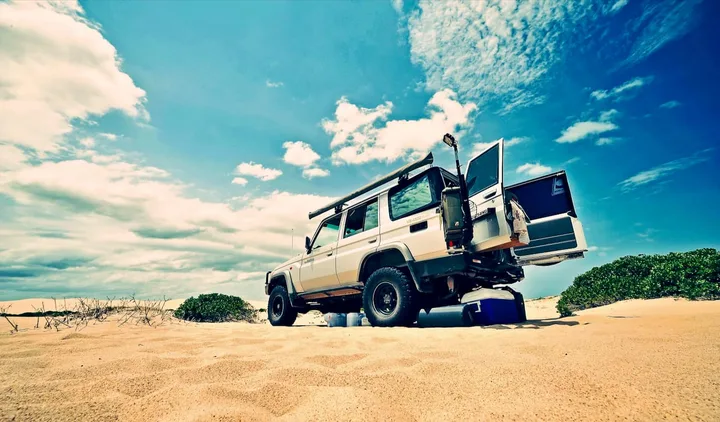
The exit strategy is built in. When your trip ends, you sell to the next wave of arriving travelers and recover a chunk of what you spent. The net transport cost over several months can end up lower than a month of van rentals.
And if you want to cut costs further still: find people going the same direction. Hostel bulletin boards and Gumtree both have active ridesharing sections. CoSeats is worth checking too. Split fuel four ways across the Nullarbor and you’ve beaten every other option on price. You’ll also probably end up with better stories.