The Hidden History Behind Mardi Gras Most Americans Never Learn
Purple, Gold, and Green — Each Color Has a Job
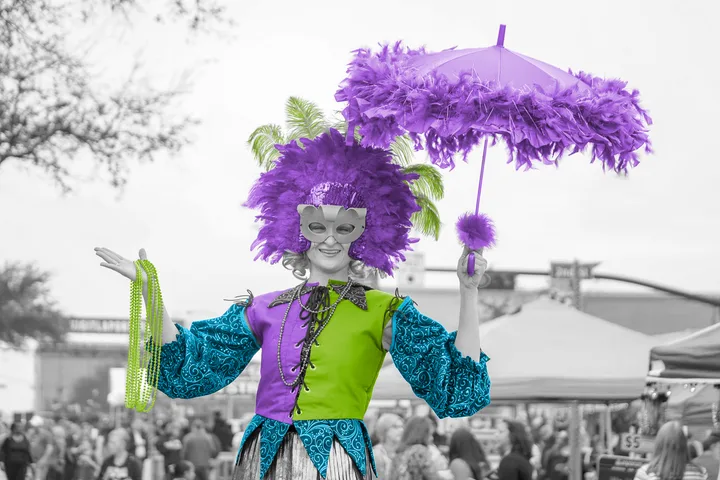
The three official colors of Mardi Gras aren’t random. They trace back to the first Rex parade in New Orleans in 1872, where the Rex Organization almost certainly drew on the laws of heraldry — the medieval system governing flags and coats of arms. Under those rules, a banner must contain three fields combining colors and metals. Gold fit neatly. Purple and green rounded out the trio.
What the Rex Organization never publicly explained was why those particular shades. The mystery held for two decades. Then, at the 1892 Rex parade — themed “Symbolism of Colors” — each float carried an answer. Purple stood for justice. Gold for power. Green for faith. Three floats, three declarations. A pageant as much political as festive.
New Orleans Wasn’t First. Alabama Was.
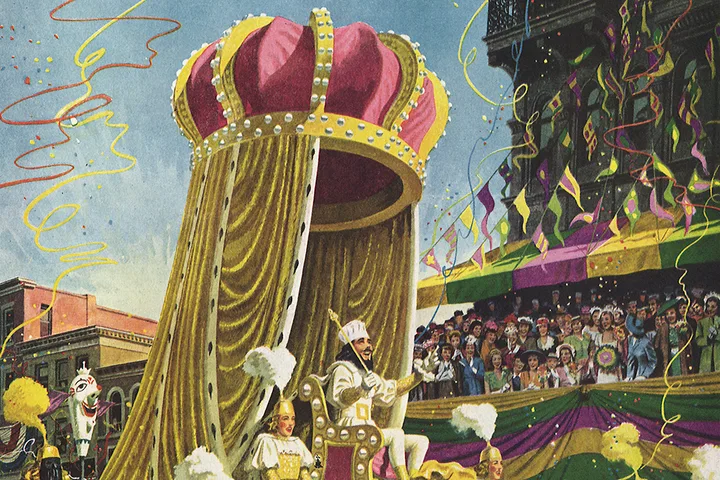
Most Americans picture New Orleans the moment someone says Mardi Gras. That picture is incomplete. The first recorded Mardi Gras celebration on U.S. soil happened well outside Louisiana — in what would become Mobile, Alabama.
On March 2, 1699, French Canadian explorer Jean Baptiste Le Moyne Sieur de Bienville landed at a muddy Gulf Coast point the night before Mardi Gras. His crew named the spot Pointe du Mardi Gras. By 1702, Bienville had pushed east along the coast and built Fort Louis de la Louisiane on the Mobile River. A year later, a local Frenchman named Nicholas Langlois organized a proper celebration — the first recorded one in the country. New Orleans wouldn’t see regular Mardi Gras festivities until the 1730s, a full 30 years after Mobile. The city still throws the party today, drawing roughly a million attendees each year.
Secret Societies Plan the Whole Thing
Behind every float, every costume, every shower of beads is a krewe — a private social club whose entire reason for existing is Carnival. The word is an antique spelling of “crew,” coined in New Orleans no later than 1857. The concept was borrowed from Alabama, where the Cowbellion de Rakin Society, founded in Mobile in 1830, first pioneered the mystic-society model. New Orleans saw the idea and wanted in.
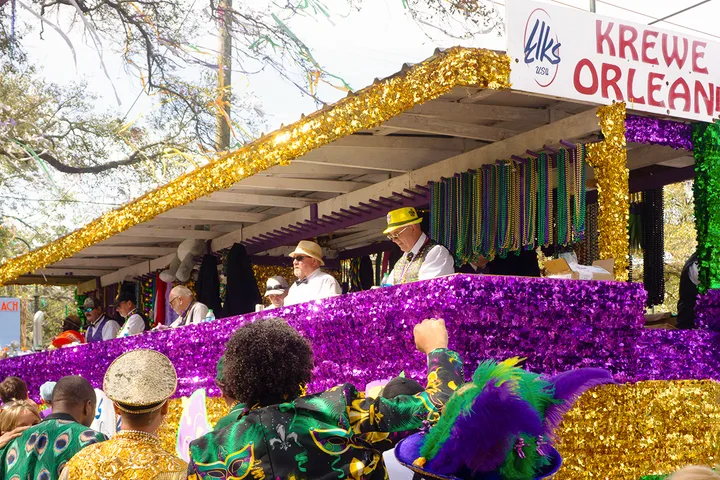
Krewe members work year-round: designing floats, sewing costumes, booking venues for balls. Each krewe also elects a Rex — a king — whose parade serves as the grand finale of the season. The oldest krewe on record is the Mistick Krewe of Comus, which costumed-up and paraded through New Orleans for the first time in 1857, setting a standard every krewe that followed tried to match. Today the largest truck-float krewe is the Krewe of Elks Orleans, founded in 1935, rolling out 50 individually designed floats and 4,600 riders in a single procession.
Float Riders Follow a Strict Code
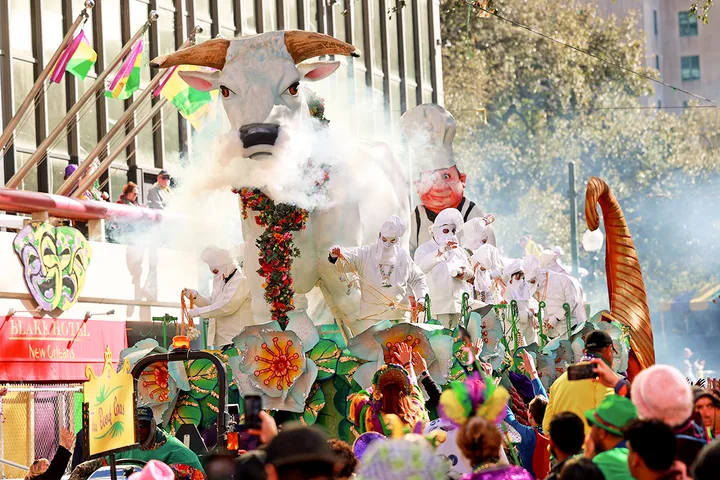
Parade participants in New Orleans operate under rules most spectators never see. Float riders must wear festive masks throughout the procession. In Jefferson Parish, removing a mask mid-parade can get a rider ejected and fined up to $500. Corporate logos on floats are banned outright — no branding, no thrown advertisements. The city enforces this to protect each krewe’s artistic theme from becoming a moving billboard.
The environmental rules are newer and sharper. In 2025, the Krewe of Freret became the first New Orleans krewe to ban plastic beads entirely, targeting the estimated 200,000 sets that end up snagged in trees, clogging storm drains, and filling landfills after each celebration. Other krewes are watching.
Mardi Gras Is the Finale, Not the Festival
Fat Tuesday gets all the attention, but it’s the closing act. The season it caps is Carnival, which kicks off on Twelfth Night — January 6 — and runs until Mardi Gras itself. Depending on when Easter falls, that window stretches anywhere from 29 days to 64. “Mardi Gras” is French for Fat Tuesday, named for the tradition of gorging on rich, indulgent food before Ash Wednesday and the 40-day fast of Lent that follows.
In the weeks before the main parades, New Orleans fills with streetcar processions, medieval-costumed marchers honoring Joan of Arc on her January 6 birthday, and dozens of themed balls. Then there’s the King Cake — a ring-shaped, frosted confection dusted in purple, gold, and green sugar, sold at bakeries across the city from January through Fat Tuesday. Hidden inside each one is a tiny plastic baby, a nod to the birth of Christ.
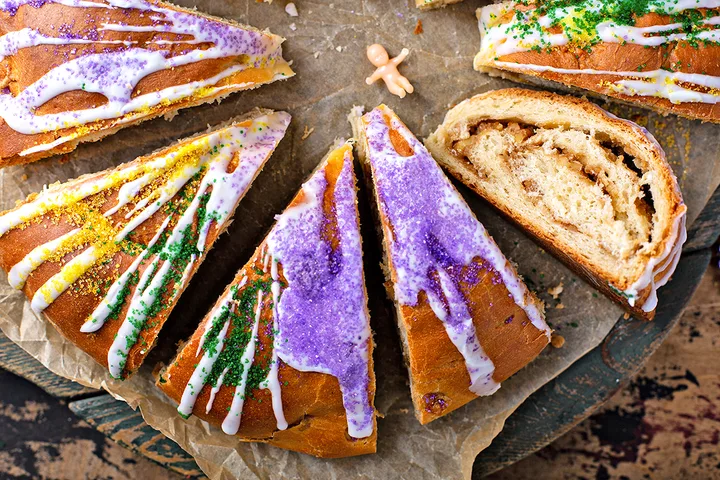
Similar cakes appear across Latin America and Europe, though the hidden item shifts: a bean or coin in France, a dried fava bean in Portugal. The obligation that comes with finding it stays the same everywhere. Find the prize in your slice, and you’re buying the next cake or hosting the next party. One bite of luck, one round of obligation. That’s Carnival in miniature.