Darth Maul Just Became the Most Important Character in Star Wars TV
The Show That Held the Franchise Together
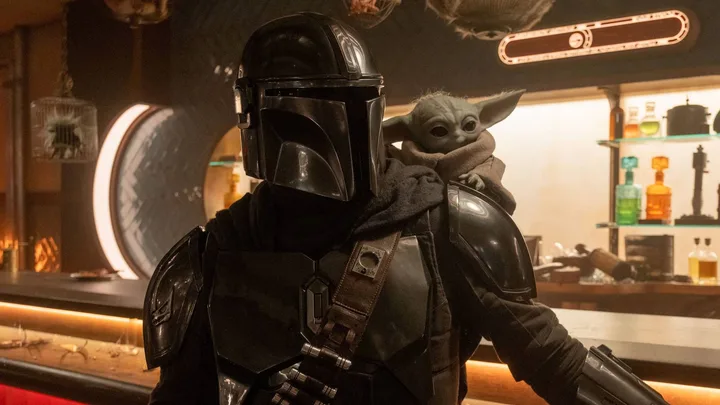
After The Rise of Skywalker left Star Wars fans cold and quarrelsome, Disney+ needed a win badly. It got one. The Mandalorian arrived with dust on its boots and a green baby on its shoulder, and for two seasons it reminded people why they loved this universe in the first place. No senate hearings. No prophecies. Just a bounty hunter trying to do right by a kid who wasn’t his.
Din Djarin worked because he was human-scaled. His world had texture — worn armor, bad food, backwater cantinas. He showed what the galaxy looked like after the Empire fell: messy, uncertain, the New Republic more bureaucratic nuisance than savior. Fans latched on, and fast.
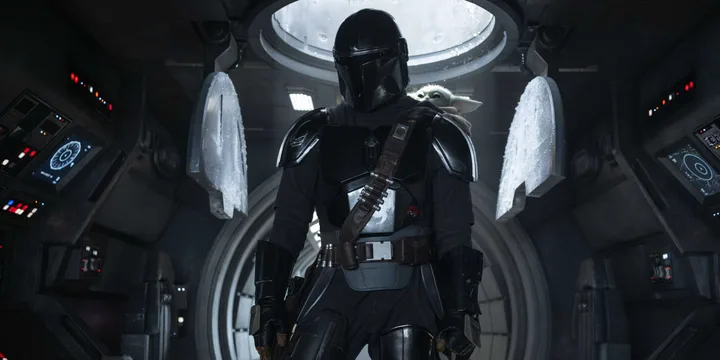
But momentum fades. By Season 3, the show had grown heavy with lore and cameos. Luke Skywalker showed up. Then Ahsoka. The Mythosaur lurked beneath a sacred sea, promising payoff that never quite arrived. The scrappy bounty hunter story had become a delivery system for franchise connective tissue. The magic thinned.
Why Maul Was Always the One to Watch
Darth Maul showed up in The Phantom Menace in 1999 as pure visual threat — red and black face, double-bladed saber, maybe fifteen words of dialogue across the whole film. He died at the end, bisected by a padawan. Case closed, everyone assumed.
Then The Clone Wars brought him back, and something unexpected happened. The show gave him grief, obsession, a brother, a throne. He took Mandalore. He ran a crime syndicate. He trained a street kid named Ezra Bridger. He schemed across a dozen episodes and kept losing — not through stupidity, but through the cruel geometry of a story that was never really his. He was always arriving just as the door closed.
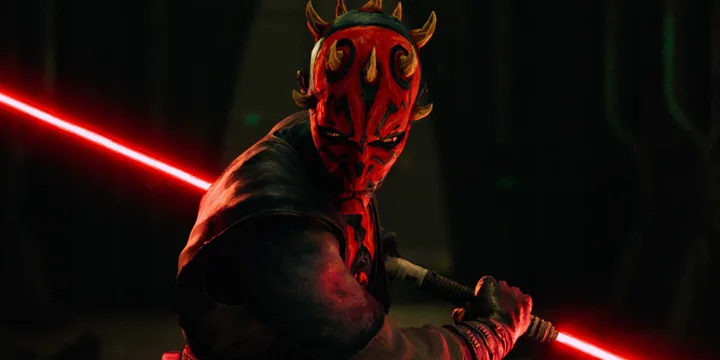
That specific kind of failure makes a character magnetic. Maul’s whole arc has the structure of myth — the figure who pushes the boulder up the hill knowing full well what happens next. He ruled a planet at the tail end of a war that made his rule pointless. He resurfaced in Solo just as that film sputtered at the box office and vanished before he could do anything with the moment. Every time the galaxy almost had room for him, it didn’t.
Shadow Lord Gives Him the Story He Was Owed
Star Wars: Maul — Shadow Lord is the first time the character gets to stand at the center without the narrative yanking the rug. The animated series on Disney+ traces his path with intention — origin, evolution, consequence — and casts Sam Witwer, who has voiced the character for years with a coiled intensity that live-action never quite matched.
Early details are tantalizing. Maul takes on a Twi’lek apprentice, which has sent fan theorists into overdrive about connections to Darth Talon. More Mandalorians appear, deepening the cultural thread that The Mandalorian introduced. Dave Filoni — the architect behind The Clone Wars, Rebels, and Ahsoka — is steering the ship, which means the connective tissue will be deliberate rather than decorative.
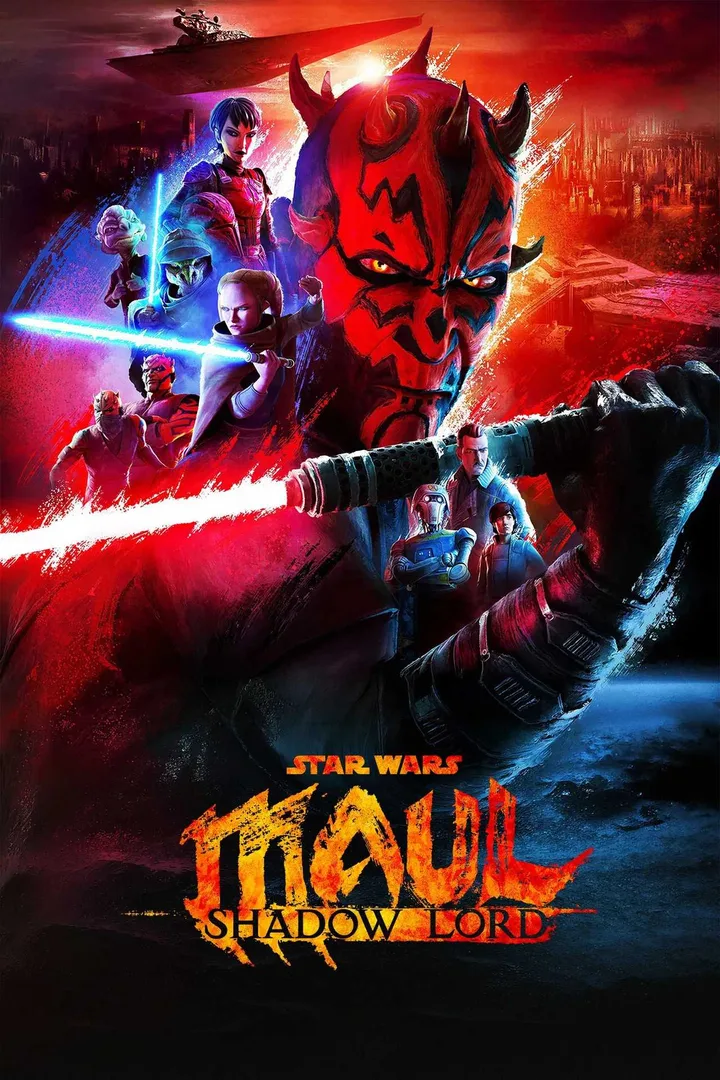
This is what the post-Mandalorian era of Star Wars TV looks like: lore as engine, not ornament. Where Din Djarin’s show used mythology as seasoning, Shadow Lord wants it to be the main course. That’s a significant bet, and Maul is the right character to carry it. His history threads through the prequel era, the Clone Wars, the Imperial years, and into the Rebellion — he’s a living through-line for the whole saga.
The Bigger Picture for the Franchise
Andor proved Star Wars could do prestige drama. The Acolyte proved a single bad reception could kill a promising show before it found its footing. Ahsoka proved that leaning hard on Rebels continuity could work if you committed fully. What no show has managed yet is to take a character the fanbase already loves — genuinely, not nostalgically — and build something new around them from scratch.
Maul is that character. He doesn’t need rehabilitation or reintroduction. The audience already knows the shape of him: ruthless, wounded, relentless. Shadow Lord just has to let him breathe. Give him a real antagonist. Let him win sometimes. Show the Sith Lord who spent decades in the dark and came out sharper for it.
Meanwhile, Din Djarin heads to theaters with The Mandalorian & Grogu, which is its own kind of pressure. The big screen demands bigger stakes. If that film works, it validates everything the Disney+ era built. If it stumbles, the franchise needs something solid on television to hold the line. Either way, Maul — silent enforcer turned tragic schemer turned animated lead — is exactly the kind of complicated, battle-scarred character Star Wars television has been circling for years without committing to. The wait is finally over.