These Cold-Blooded Creatures Are Hiding Some Genuinely Wild Secrets
Cold Blood, Warm Sun
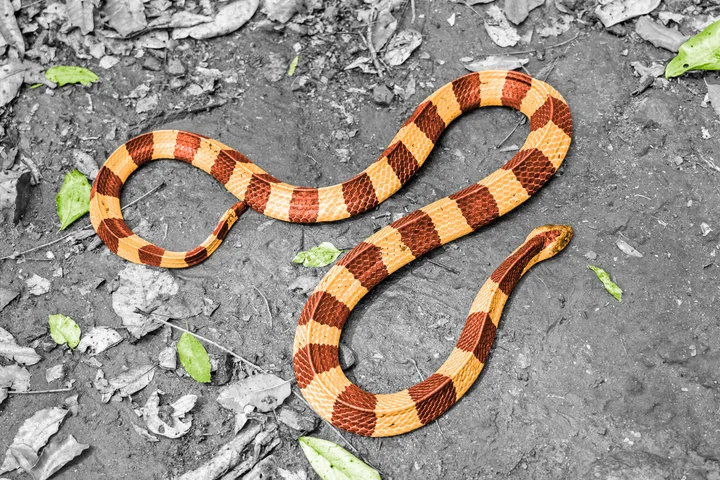
The phrase gets misread constantly. A snake’s blood isn’t cold — it’s whatever temperature the snake can borrow from the world around it. They can’t manufacture internal heat, so they go hunting for it externally: pressing their bellies against sun-baked rock, stretching flat on warm pavement, retreating under logs when the afternoon turns punishing. That’s ectothermy. Temperature borrowed, not built.
In colder climates, winter is a survival problem snakes solve through brumation — the reptile answer to hibernation, though not quite the same thing. A brumating snake goes still and slow, metabolic processes dialed nearly to zero. Unlike a hibernating mammal, it might rouse itself occasionally just to drink water, then sink back into dormancy. The cold is the clock. Warmth is what resets it.
Slithering Is Just the Beginning
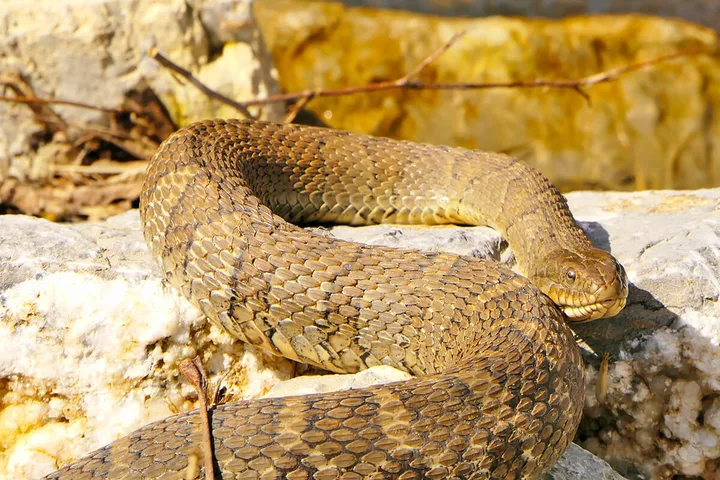
Lateral undulation — the classic S-curve shimmy — is what most people picture. It works because a snake can push off almost anything: a pebble, a grass stem, a crack in pavement. But it’s one move in a surprisingly deep repertoire. Sidewinding, used on loose sand where there’s nothing stable to push against, rolls the body sideways in a wave. Concertina locomotion is pure accordion logic — coil, anchor, pull forward, repeat. Rectilinear movement is almost unsettling: the belly rippling forward in a straight, silent crawl.
Then there’s flight. The paradise tree snake of Southeast Asia launches itself off branches, flattens its body into a C-shape, and glides to a chosen landing spot below. It actively adjusts its angle mid-air. Calling it flying is only a slight exaggeration.
Seeing Heat in Total Darkness
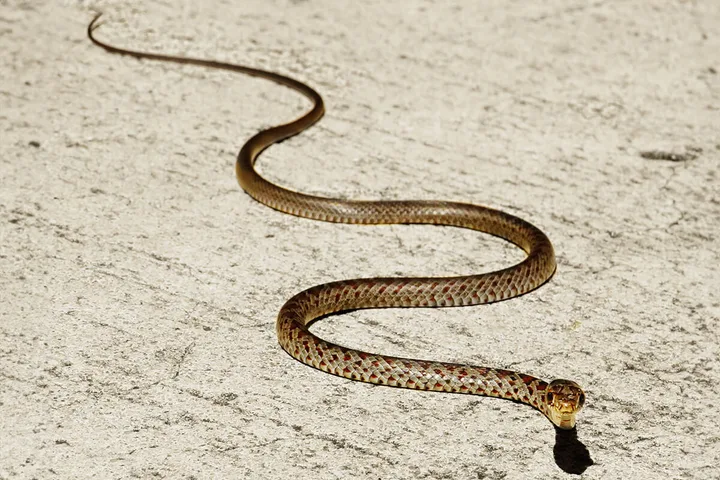
Pit vipers, boas, and pythons carry something tucked between their eyes and nostrils: rows of specialized pits lined with heat-sensitive membranes. Not eyes — infrared detectors, reading the thermal signature of anything warm nearby. Those signals travel to the brain, which overlays them onto visual input and produces a working thermal image. A mouse in a dark burrow registers like a small flame.
This is why these species hunt just as precisely at 2 a.m. as at noon. Snakes aren’t categorically nocturnal or diurnal — they move when they move, and the heat sensors erase one of the biggest obstacles to nighttime predation. The dark simply stops mattering.
Every Continent Except the Coldest One
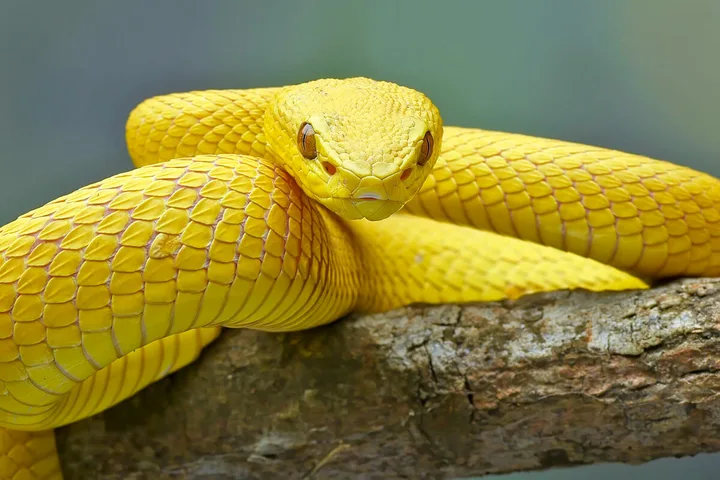
Dense Amazonian rainforest, the Sahara, the pine barrens of the American Southeast, tropical archipelagos across Southeast Asia — snakes have claimed all of it. More than 3,000 species, filling nearly every available niche on land. The single holdout is Antarctica, where the ice sheet offers no external heat to borrow and no prey to sustain a population. It’s not a philosophical objection. It’s physics.
Ireland is the other famous exception, though for different reasons. When the last ice age ended and sea levels rose, Ireland was cut off from Britain and continental Europe before snakes could colonize it. The ocean became a wall. No snake has crossed it since. The legend that Saint Patrick drove them out makes for better mythology than biogeography — but the ice age story is just as dramatic if you sit with it.
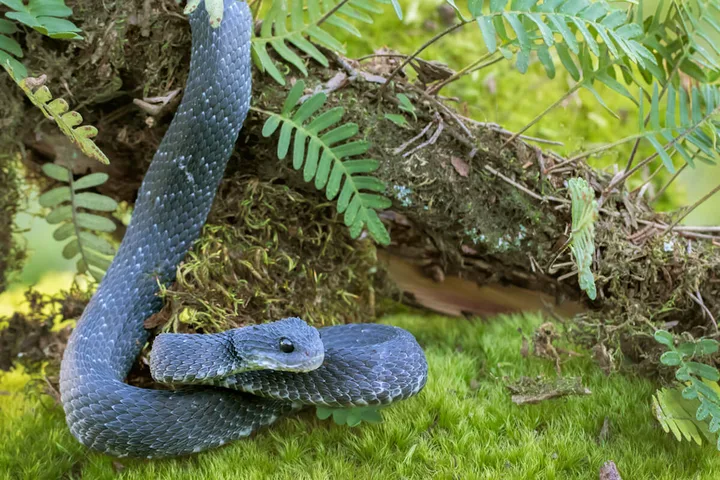
The Tongue Does the Smelling
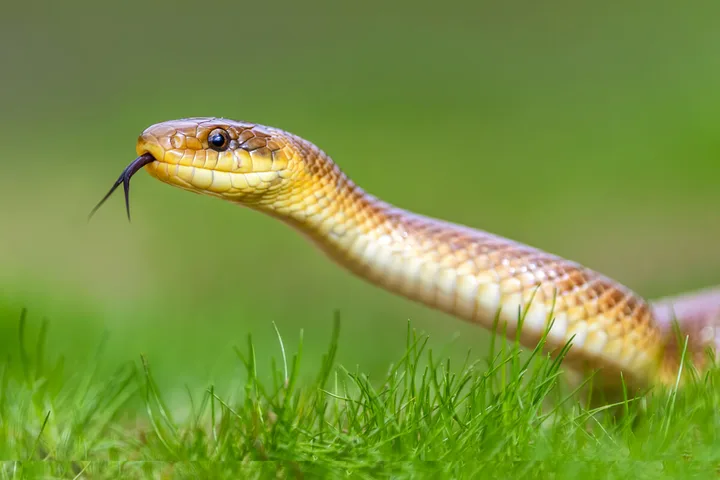
Snakes have nostrils. They just don’t rely on them. The real sensory work happens with the tongue — that constant, rapid flickering that looks anxious but is actually methodical data collection. The forked tongue sweeps scent particles from the air and ground, then carries them back into the mouth. No taste buds. No olfactory receptors on the tongue itself. It’s a delivery system, nothing more.
Inside, the particles get deposited into the Jacobson’s organ — a specialized receptor in the roof of the mouth that analyzes their chemical composition and fires signals to the brain. Prey, predators, a potential mate: the snake reads all of them through this channel. The fork isn’t decorative either. Each tine samples a slightly different point in space, giving the snake a directional fix on where a scent is strongest. Stereo smell, built into anatomy.