Full-Time RVers Reveal Every Secret That Makes Road Trips Actually Work
The Sweet Spot Nobody Talks About
Mike and Anne Howard have been on the road since 2012. That is not a gap year. That is not a sabbatical. Fourteen years ago they left for their honeymoon and simply never came back — racking up all seven continents and eventually settling into a 1985 Toyota Sunrader they named Buddy. In that time they have slept in every configuration imaginable: backpacks, house-sits, five-star suites, small-ship cabins. Nothing stuck the way a campervan did.
Their first clue came in New Zealand. They rented a campervan, drove the South Island with nowhere to be, and felt something click. The freedom was different from backpacking. The comfort was different from hotels. Three years later they were living full-time in a 21-foot rig, and they have opinions about size. Strong ones.
Twenty-one feet is the number. The HoneyTrek crew will tell you those sprawling 35-foot coaches with residential refrigerators and slide-out living rooms look incredible in the lot — and become a liability the second you want to drive down a forest road or park in a city. Every extra foot costs you a destination. Go shorter than 19 feet, though, and you are giving up your own bathroom. And once you have had a flushing toilet in a national conservation area at 2 a.m., you cannot un-know that luxury.
Power Without the Hookup
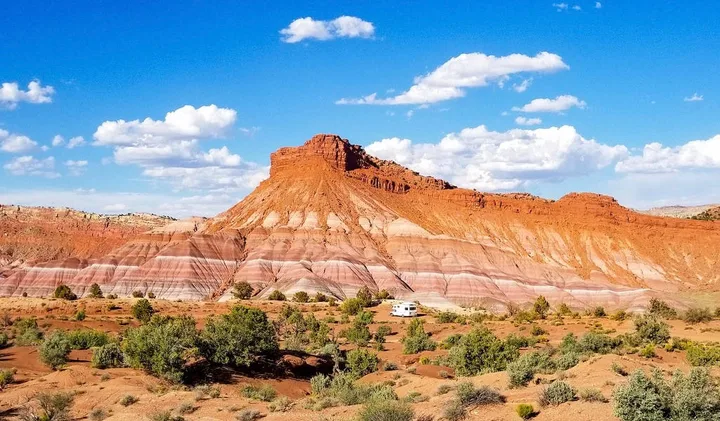
The house battery runs everything: lights, water pump, phone chargers, laptop. When you are driving daily, the alternator keeps it topped up. When you stop for a week in the Utah desert with no hookups in sight, you need another plan.
The Howards went solar. They bought 300 watts of flexible monocrystalline panels, mounted them to the roof, and wired the whole system — charge controller, lead-acid battery, power inverter — in about 20 hours of DIY work. Total cost: $1,200. In three years of full-time travel, they have never paid for electricity once. If that kind of project sounds miserable, a professional install runs $1,000 to $2,000. Still cheaper than three years of RV park fees. For occasional campers who want to test the waters first, a portable panel in the $70 to $150 range will keep your devices alive without touching a single wire.
Want serious longevity? Swap the lead-acid battery for a lithium-ion deep cycle unit. The upfront cost stings, but the lifespan and efficiency gap is real. Either way, once solar is part of your rig, boondocking goes from a budget compromise to a genuine preference.
Staying Connected From the Middle of Nowhere
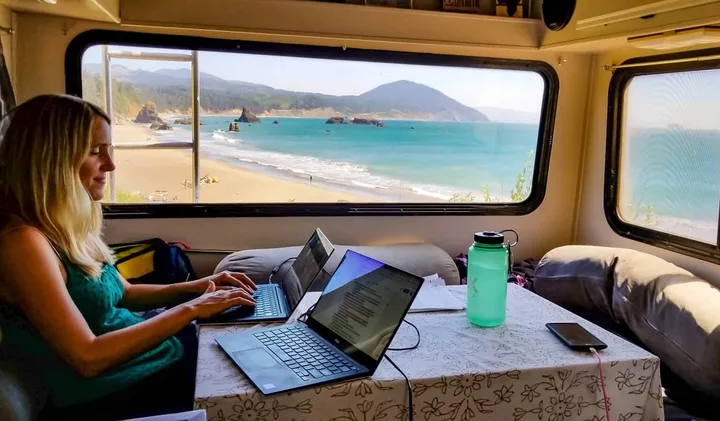
Your phone is your router. That is the whole strategy. The Howards run two laptops off a Verizon hotspot — 50 gigabytes unthrottled per month, unlimited calls and texts, around $109 a month. It works in most places people actually want to camp. Choose a carrier with real rural coverage: Verizon or AT&T. Discount carriers piggyback on the same towers but get deprioritized when the network gets busy, which is exactly when you cannot afford it.
Data discipline matters on a long trip. The GlassWire app shows you what is eating your gigabytes. NetLimiter on the laptop lets you throttle background processes that quietly drain your allowance. Save large uploads and downloads for library Wi-Fi — public libraries are underrated as workspaces, quiet and free and usually full of interesting people.
And yes, McDonald’s parking lots work. Not glamorous. Genuinely useful.
Free Camping Is Everywhere
The federal government manages 640 million acres of public land in the United States. National forests, Bureau of Land Management land, national conservation areas — most of it open to dispersed camping with no fee, no reservation, no neighbor twelve inches away on the other side of a chain-link fence. The sites are bare. Sometimes it is just a cleared patch of ground with a fire ring. With a self-contained rig and your own water, that is all you need.
The apps that unlock this world: iOverlander and FreeCampsites.net. Between them, the Howards rarely pay for a site. When they do want a traditional campground — to meet other travelers, access amenities, or sleep inside a national park — ReserveAmerica covers 290,000 public sites. HipCamp lists private land options, think farms and ranches with spectacular views, and functions like a camping-specific Airbnb. KOA fills the gaps when you need reliable infrastructure fast.
City Streets Are Fair Game
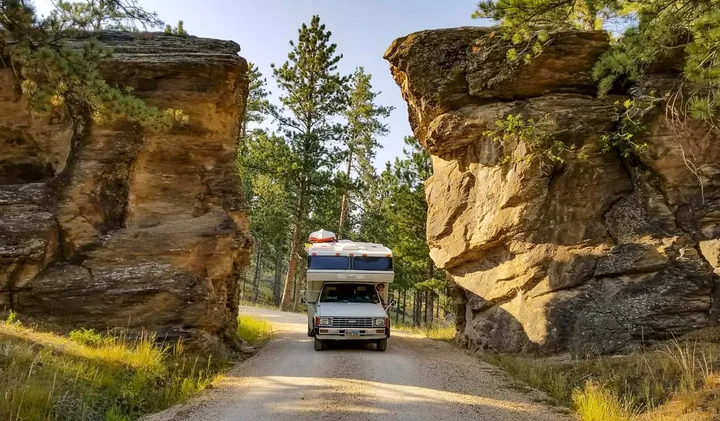
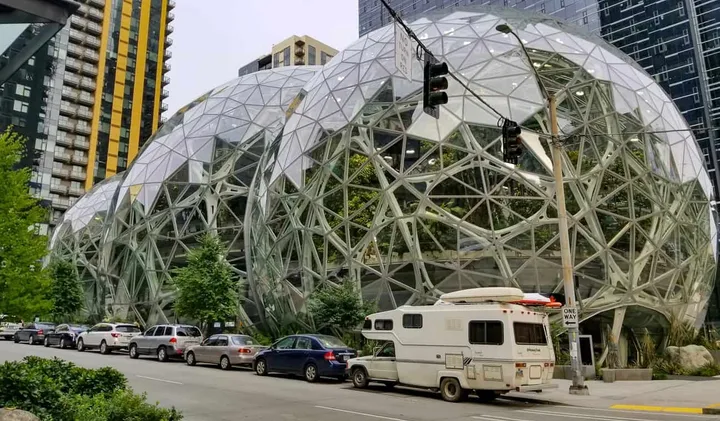
Urban overnight parking in an RV gets a bad reputation it does not fully deserve. The Howards have spent countless nights parked in cities without incident. The rules are simple: arrive after dark, leave before the neighborhood wakes up. Keep the windows covered. Do not run the generator. Do not sprawl — no chairs, no awning, no outdoor kitchen setup. Look like a vehicle, not a campsite.
Check local parking regulations before you commit to a block. Residential streets in many cities have no overnight restrictions. Industrial zones near rail yards or warehouses are often genuinely fine. Crack a window, kill the lights, and the rig blends into the urban landscape like any other parked van.
Stretch Every Gallon
Gas prices shift. The Howards wrote their original tips when fuel was $2 a gallon. The math still holds at $4. A few habits compound over thousands of miles: use GasBuddy to find the cheapest station in the next town, stay below 60 mph on the highway (fuel economy drops hard above that), and skip the drive-throughs that leave the engine idling. An RV is not a sports car. It rewards patience.
The bigger gain is route choice. Set your GPS to avoid highways and the country opens up. Interstates are efficient and visually bleak. The old road network — two-lane state highways following river valleys, climbing passes, threading through actual towns — still exists. America’s Byways is a Department of Transportation program protecting 150 scenic routes for exactly this reason. The National Geographic Guide to Scenic Highways and Byways maps them all in print form, which matters when cell service disappears and Google Maps shrugs.
When You Need a Real Bed
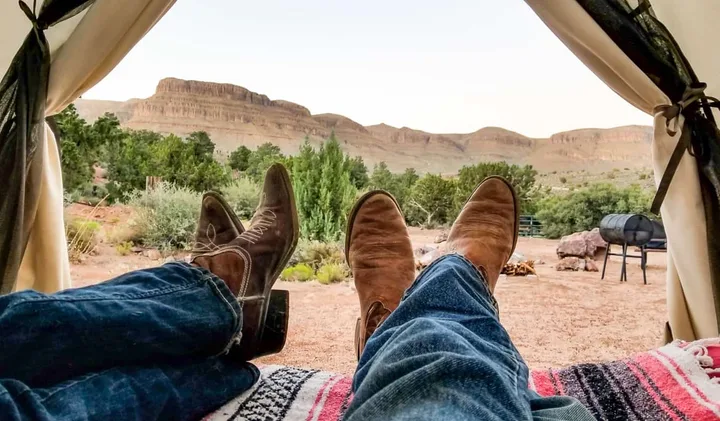
Even people who love small-space living hit a wall. The Howards call it glamping therapy. A night or two in a treehouse, a canvas safari tent, a dome with a proper mattress and someone else handling breakfast — it resets everything. The responsibility disappears. No camp setup, no cooking, no troubleshooting the water pump. Just sleep.
The outdoor accommodation industry has exploded. HipCamp lists hundreds of unique private-land sites. The Howards wrote a book on the subject — Comfortably Wild: The Best Glamping Destinations in North America — after discovering how dramatically a well-designed outdoor stay can restore enthusiasm for the road. It is not cheating. It is maintenance.
Before You Roll Out
Three types of coverage matter before you leave the driveway. RV-specific insurance covers the vehicle itself and everything inside it — standard auto policies often exclude the living quarters. Roadside assistance built for RVs is different from standard AAA; you want someone who can actually tow a 21-foot rig and knows what a blown coach tire looks like. Travel medical coverage rounds out the picture, especially if you are pushing into remote areas where the nearest ER is a serious drive away.
Renting before buying is the obvious first move for anyone who has never done this. A week in a rented campervan tells you more about your preferences than any amount of YouTube research. The online van life and RV community is enormous and genuinely helpful — forums, Reddit threads, Instagram accounts from full-timers who have seen every mechanical failure and found every loophole. The learning curve is real, and people on the other side of it are happy to talk.
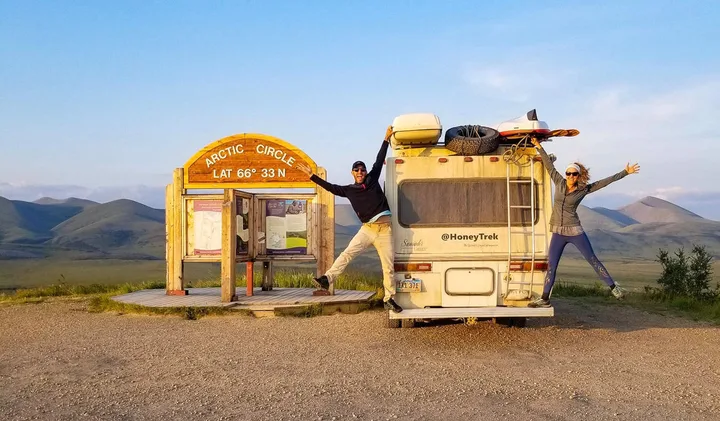
The Howards left for a honeymoon. They built a life. Buddy the Camper has covered 47 states, the Baja Peninsula, the Arctic Circle, and several years worth of hard-won knowledge. The rig is old. The advice is current. Start small, go slow, and do not underestimate how good a cold beer tastes when you are parked in front of a view that cost you nothing.