Air New Zealand Is Putting Actual Bunk Beds in Economy Class This Year
The Idea That Took Six Years to Fly
Eighteen hours in an economy seat is an endurance sport. You already know the drill: the cramped neck, the numb lower back, the 3 a.m. surrender to staring at the seat pocket in front of you. Air New Zealand looked at that misery and decided to do something about it.
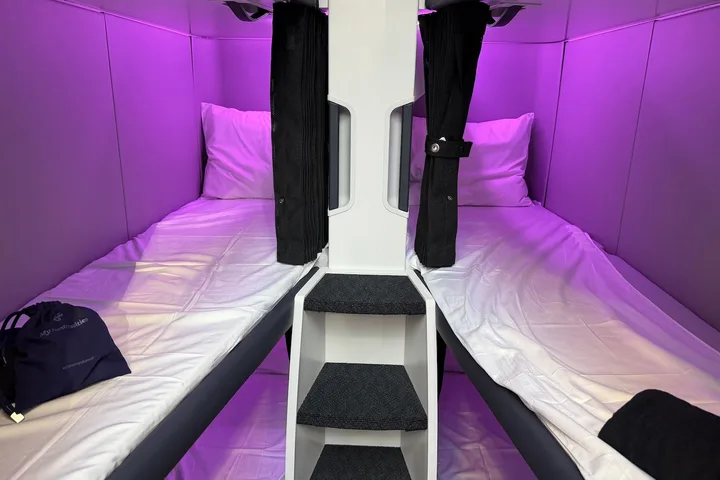
The airline is bringing the Skynest to its long-haul fleet — a dedicated sleeping cabin tucked into the economy section of the plane, with six real bunk beds stacked three high on each side of a central ladder. It has been in development for over six years, and it is finally, actually happening.
What Eighteen Hours of Flying Just Changed Into
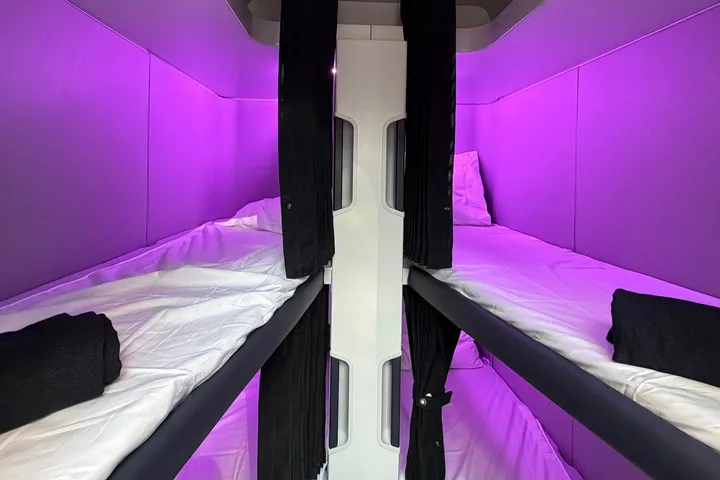
The Skynest occupies space where a galley and a row of seats would normally sit, in the heart of the economy cabin. Step inside and you get white bedding, a proper pillow, purple mood lighting, and curtains that draw closed. It looks less like an airline product and more like a Japanese capsule hotel that somehow got bolted into a Dreamliner.
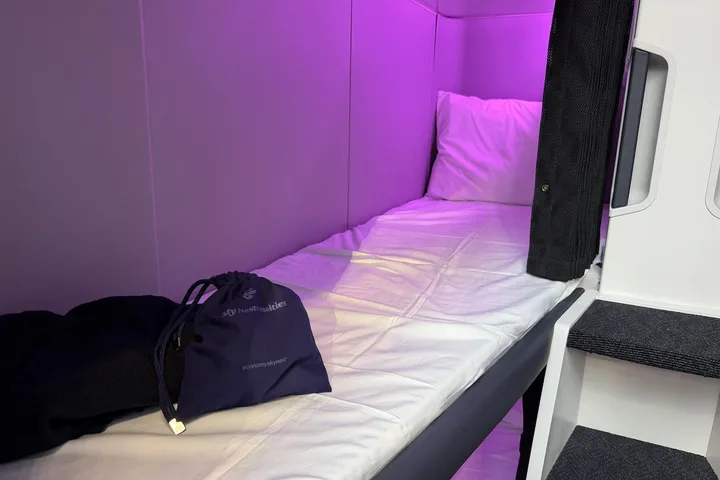
Each pod comes with USB-A and USB-C charging ports. Passengers who book will receive fresh linens, a blanket, socks — shoes are banned — and an amenity kit branded the “Nestcessities,” which includes an eye mask, earplugs, and skincare products from New Zealand label Aotea. There’s a dental kit too. This is not a glorified lie-flat seat. It’s a bed.
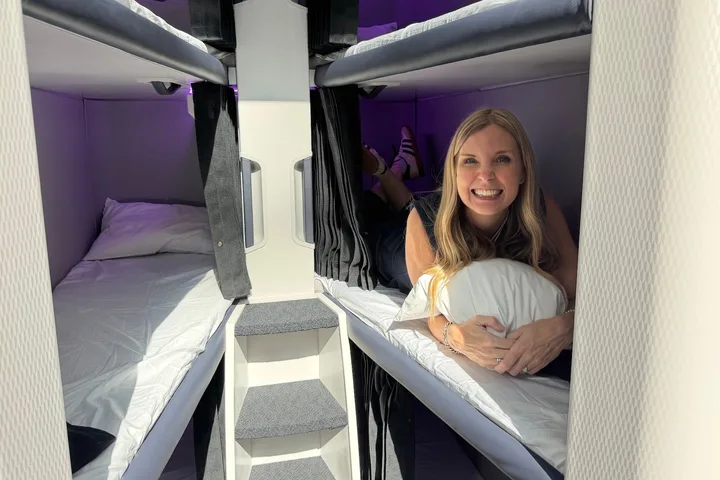
The bunks run 6 feet 6 inches long, which means most adults can stretch out completely flat. Shoulder width sits at around 25 inches before tapering toward the feet. A journalist who tested the model at a New York City preview stood 5 feet 7 inches and fit with room to spare. A man at the same event measured 6 feet 4 inches and also managed a full stretch, though with considerably less margin for error.
Bottom Bunk or Top Bunk
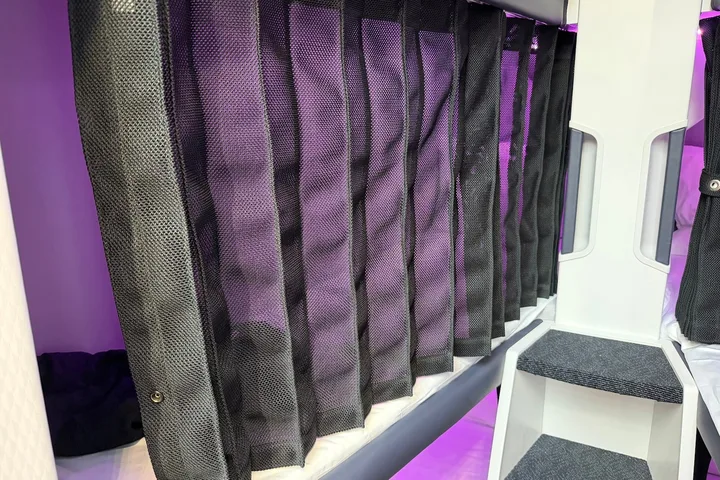
The bottom bunk sits close to floor level — no climbing, no gymnastics, just slide in. It’s warmer and more enclosed than you’d expect. The top bunk, predictably, requires a climb up the ladder and a certain willingness to fold yourself into position. Once you’re in, though, it works. Getting out with any dignity is a separate challenge.
Passengers book a four-hour block of time, not a seat for the full flight. So you’ll return to your economy or premium economy seat once the session ends. At the close of your block, the lights gradually brighten to coax you awake. If that doesn’t work, a flight attendant will tap your feet.
The Rules of the Pod
Skynest is not a free-for-all. No eating. No audio without headphones. No shoes. The airline also asks guests to minimize climbing in and out during their block — six people in a tight space means one restless sleeper can ruin it for everyone. Noise-canceling headphones and earplugs are not optional extras here; they’re survival gear.
The privacy question will be answered in practice. Six strangers, in close quarters, trying to sleep at altitude — the etiquette is unwritten. The pods have curtains, but sound travels. Whether passengers treat it like a library or a red-eye bus remains to be seen.
The Route, the Price, the Date
Skynest will debut on two Boeing 787 Dreamliners flying between John F. Kennedy International Airport and Auckland — one of the longest scheduled routes in commercial aviation at roughly 17 to 18 hours depending on direction. The price for a four-hour block is $495.
Air New Zealand opens bookings on May 18. The first Skynest flights are scheduled for November 2026. Economy passengers on that JFK-Auckland run will be among the first people in commercial aviation history to book a bunk bed in the sky. After six years of waiting, and 18 hours of flying, that might be worth every cent.