Ethiopian Airlines Promised Their Best Business Class Seat and Then Switched the Plane
Sixty Thousand Points and a Leap of Faith
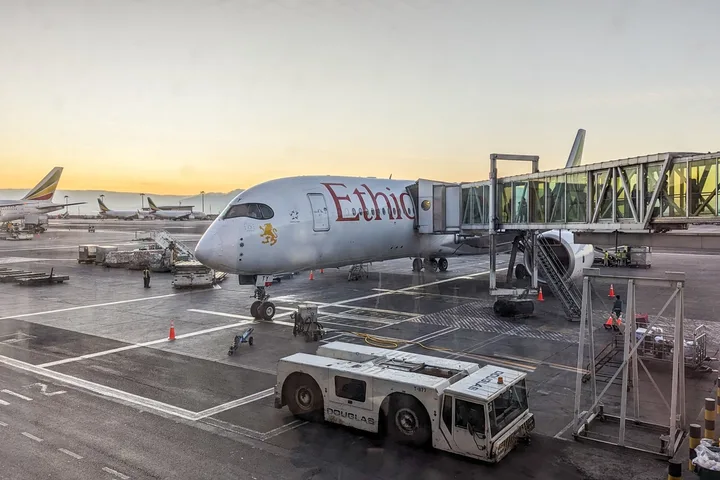
Ethiopian Airlines doesn’t always get the same attention as Emirates or Qatar Airways when travelers debate the best way to reach Africa. It should. The Star Alliance carrier flies more than 100 aircraft to more than 100 destinations across Africa, the Middle East, Europe, and the Americas, all routing through Addis Ababa Bole International Airport. It also quietly offers some of the most generous business-class award availability of any long-haul carrier operating out of Europe.
One recent traveler testing the airline’s Cloud Nine cabin cashed in 60,000 Air Canada Aeroplan points plus $337 in taxes — including the UK’s punishing Air Passenger Duty — for a one-way business-class seat from London Heathrow to Nairobi via Addis Ababa. The routing covers roughly seven hours on the first leg alone, departing at 8:15 p.m. and landing in Addis at 7 a.m. Overnight. Exactly the kind of flight where the difference between a good seat and a bad one is the difference between arriving rested and arriving wrecked.
The Check-In That Actually Worked
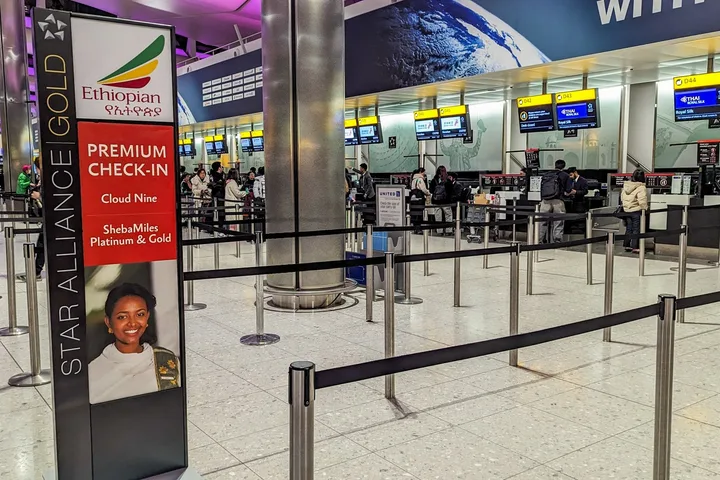
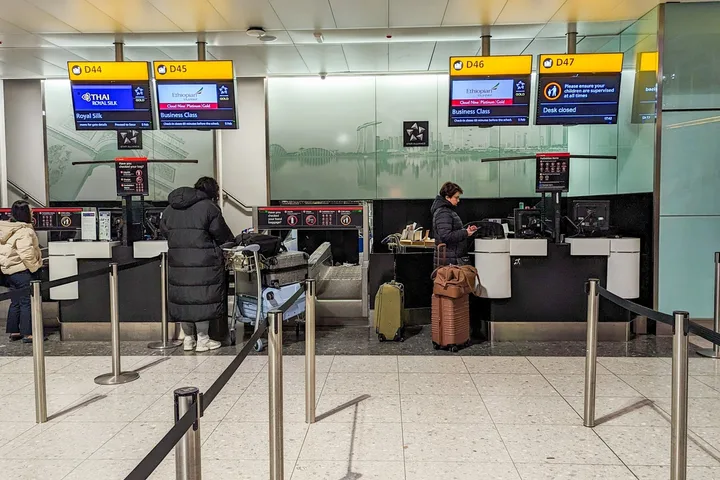
Terminal 2 at Heathrow — the Queen’s Terminal — handles Ethiopian and most other Star Alliance carriers. Two hours before an evening departure, the economy check-in line in Zone D stretched back far enough to make your shoulders drop. The business-class desk, tucked to the right, had no queue at all. A staff member handled everything quickly, without fuss.
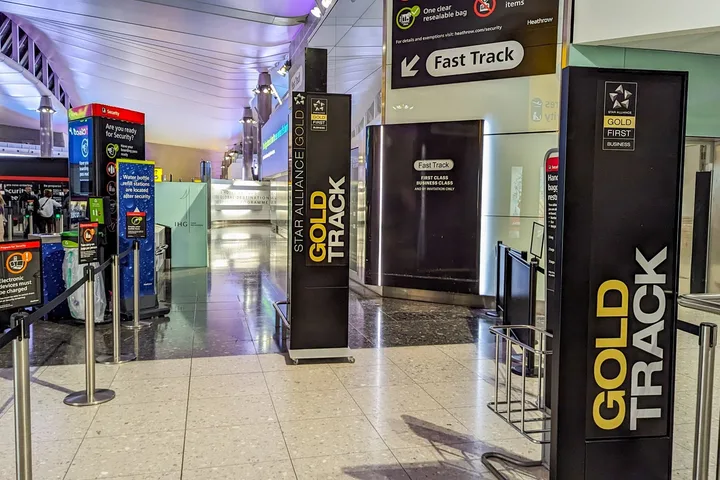
Fast-track security came next, a Star Alliance Gold benefit that cleared in minutes. Business-class passengers on evening departures from Terminal 2 have a handful of lounge options, but the long-haul gates sit in the B pier — making the Lufthansa lounge in the A pier a geography problem. The smarter move is the United Club, which sits comfortably close to the gates and, in the evening after most United flights have pushed back for the day, feels almost private.
The United Club at Heathrow punches well above the standard for its category. A long bar with actual bartenders — not a self-serve station — pours complimentary beer, wine, spirits, and sparkling wine. The hot and cold buffet included chicken meatballs and vegan bean chili, and everything looked like someone had actually thought about it. No à la carte service like a Polaris dining room, but good enough that leaving felt premature.
The Seat Swap Nobody Warned About
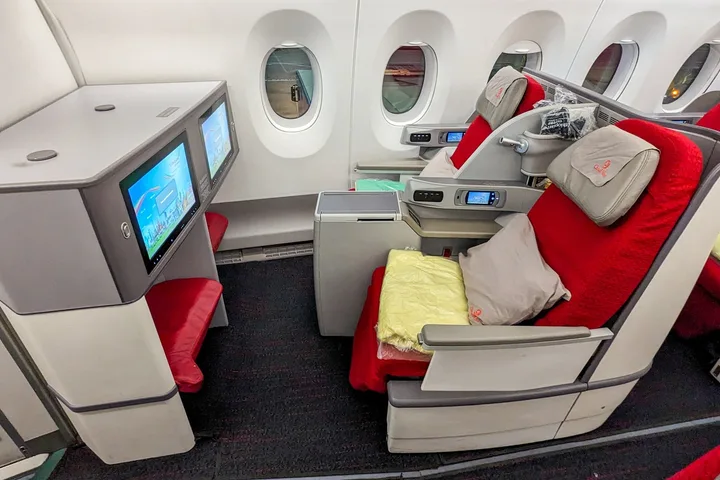
Here’s where the night turned. Ethiopian Airlines operates two different business-class configurations on its Airbus A350-900s. The newer setup is a staggered 1-2-1 layout — every seat has direct aisle access, more privacy, more modern hardware. The older setup is a 2-2-2 arrangement that dates back to a different era of expectations. The seat map had shown the newer product right up until the day before departure. The press office had confirmed the Heathrow route typically gets the better plane.
Walking onto the aircraft, the older cabin was immediately obvious. Several passengers reacted visibly. These are Collins Aerospace Diamond seats — 78-inch flat beds, 22-inch width, 16-inch screens — specifications that look acceptable on paper but feel exposed in practice. The dividers between paired seats are barely symbolic. Two strangers sit close enough that a conversation feels inevitable whether you want one or not. In 2024, against the competition Ethiopian is chasing, this layout does not compete.
Row 1 and Its Complications
A window seat in Row 1 sounds appealing until you’re climbing over a sleeping neighbor at 2 a.m. to take notes. Storage is the next frustration: a cramped space under the footrest, a small shelf below the right armrest, and a gap behind the right shoulder that requires a contortionist’s patience to access. There are no individual air nozzles, so the cabin temperature is whatever the crew decides, which on this flight meant a consistent cool that bordered on chilly.
The seat’s headrest is unusually thick, which tilts your head forward at an angle that’s manageable while watching a film and quietly uncomfortable when you’re trying to sleep. No mattress pad was provided for an overnight flight. The comforter was lightweight. The pillow was substantial. The combination gets you through the night, but not elegantly. When the cabin lights went off, they went fully off — no gradual dimming, no warm transition setting, despite the A350’s mood-lighting system being capable of exactly that.
A Bright Yellow Amenity Kit and One Fatal Flaw
Ethiopian’s amenity kit arrives in a shade of yellow vivid enough to locate from across the cabin. Inside: socks, a dental set, earplugs, a face mask, hand sanitizer, lip balm, a pen, and a comb. Solid enough. The over-ear headphones are not noise-canceling, which on a quiet A350 matters less than it would on a 777, but still noticeably limits the entertainment experience.
The eye mask’s interior was nearly fluorescent yellow — it blocked nothing. Pack your own.
The four dedicated bathrooms — two forward, two aft — were kept clean and well-stocked with airline-branded cologne and lotion throughout the flight, and the touchless faucets felt genuinely thoughtful. A small thing. A good thing. The tray table, pulled from the center console, was sturdy and wide enough for a 15-inch laptop. These are the details that make the cabin livable even when the seat itself disappoints.
What Ethiopian Gets Right, and What It Doesn’t Yet
The award availability alone makes Ethiopian worth knowing about. Aeroplan redemptions start at 71,000 points round-trip from Europe; United MileagePlus seats run 63,000 one-way. Cash fares from London to Addis Ababa sit between $752 and $1,748, with business-class tickets including two checked bags up to 50 pounds each, a carry-on, and free seat selection. For travelers connecting to African destinations, the routing is hard to beat on price.
The airline is flying new aircraft. It has generous availability. The ground experience at Heathrow — from the empty check-in desk to the fast-track lane to the United Club — required almost no friction. What it hasn’t yet closed is the gap between those operational strengths and the product in the cabin. The seat swap that turned a 1-2-1 flight into a 2-2-2 one, without warning, is the kind of thing that erodes trust. Get the seat right, and Ethiopian becomes genuinely competitive. Until then, it’s a carrier worth watching — carefully.