Why Cold Winter Air Smells Like Nothing Else on Earth
Fewer Smells, Not Better Ones
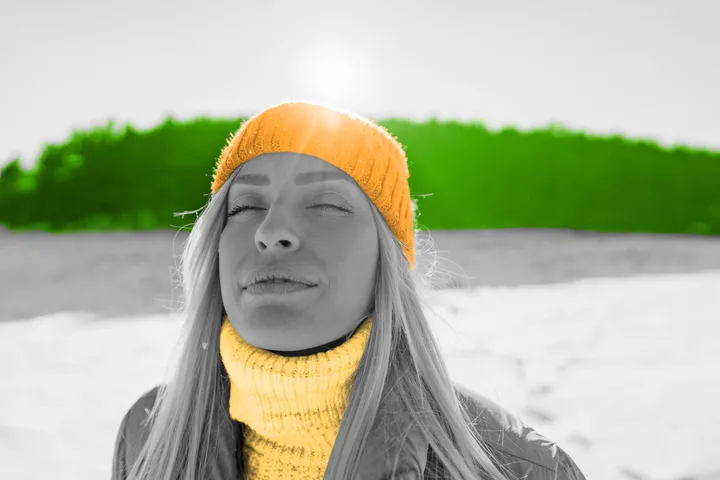
Step outside on a cold January morning and something hits you immediately. Not a scent exactly, but an absence of one. The air feels scrubbed. Bare. Almost medicinal. That sensation is real, and the explanation is simpler than most people expect: winter air doesn’t smell better so much as it smells less.
Warm air holds moisture, and moisture carries smell. Summer heat pulls volatile organic compounds off soil, garbage, pavement, and decaying plants and flings them at your nose constantly. Cold air changes all of that. Temperatures drop, airborne molecules slow down, evaporate less, and stay put. Pollen vanishes. Bacterial decay stalls. The whole olfactory world goes quiet.

What your brain registers as “clean” is mostly the relief of subtraction. Fewer competing signals mean each breath feels like a blank page. Humans are wired to find that sensation restorative, not because something good arrived, but because something overwhelming left.
What Cold Does to Your Nose
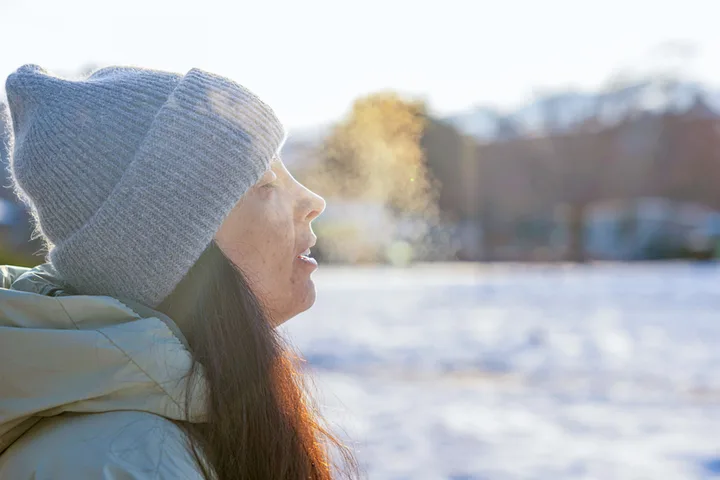
Cold air doesn’t just change what’s out there. It changes how you receive it. Inhale below-freezing air and the nerve endings inside your nasal passage react to temperature the way they react to menthol — a sharp, almost minty tingle that has nothing to do with actual scent molecules. Your brain files that sensation under “crisp” and “fresh” before any smell has even registered.
Cold, dry air can also slightly dull your smell receptors, the specialized cells that detect odors. Fewer molecules, fewer receptors firing. Counterintuitively, with less sensory noise, each breath feels more distinct rather than murkier. Stepping out of a warm house into winter air forces an immediate contrast, and the brain snaps to attention. The whole system sharpens.
What You’re Actually Smelling Before a Snowstorm
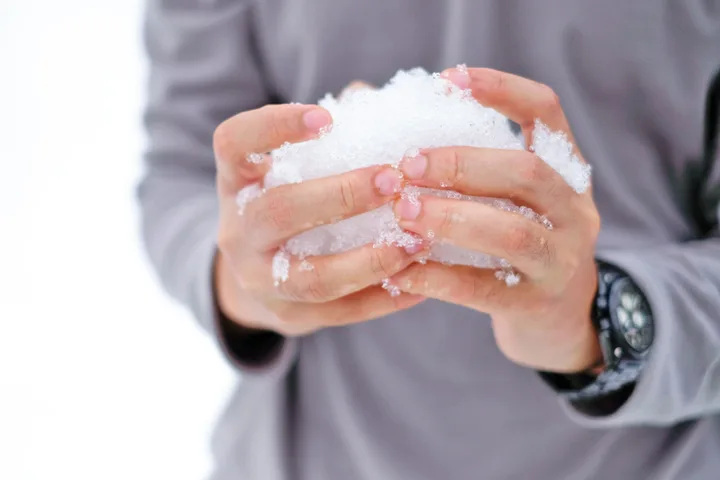
Snow is frozen freshwater. It has no smell. Yet plenty of people will tell you they can smell a snowstorm coming. They’re not wrong exactly. They’re just misattributing the source.
Before a storm, humidity rises and air pressure drops. Existing scents concentrate and carry differently: pine resin, frozen soil, woodsmoke from a neighbor’s chimney three blocks away. Cold air is denser than warm air, so smells linger and travel farther without dispersing. Over years of winters, the brain bundles that specific mix of cold, moisture, and stillness into one predictive signal. You learned it. You’re reading it now.
Why Pine Trees Dominate the Season
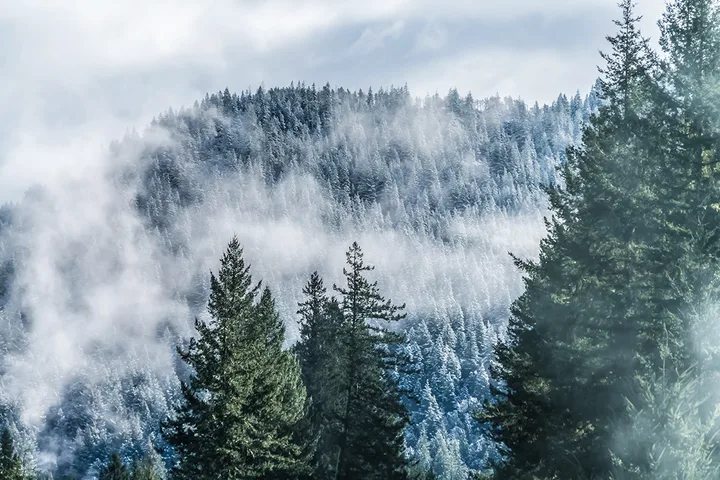
Even in January, the trees are working. Evergreens (pine, fir, spruce) produce aromatic compounds called terpenes year-round. These are the molecules behind that sharp, resinous forest smell. In summer they’re drowned out by everything else. When deciduous plants go dormant and microbial decomposition stalls, terpenes get the air to themselves.
Lower temperatures also suppress the musty odors produced by decomposing organic matter. The microbial world quiets down. With fewer unpleasant background smells competing for attention, the terpenes register more clearly. A walk through a winter forest smells almost aggressively clean for exactly this reason.
Fresh Feeling, Complicated Reality
Winter air smells clean. That doesn’t make it clean. In cities especially, cold weather can trap pollutants at ground level. A layer of cold, dense air acts as a ceiling, preventing exhaust and particulates from rising and dispersing. Air quality can worsen significantly while your nose reports something pleasant.
The cold slows evaporation of odor-causing chemicals, so fewer of those molecules reach you — which creates a false sense of purity. What you’re experiencing is a muted olfactory world, not a scrubbed one. The sensation is genuine. The interpretation needs a caveat.
Still, the dryness and simplicity of winter air does make breathing feel better. The crispness is real even when cleanliness is relative. And sometimes the feeling of freshness, sensory and chemical and psychological all at once, is enough. Every January inhale is a small reminder that the world doesn’t always smell like itself, and sometimes that’s the whole point.