The Surprising Reasons Your Home Looks Exactly the Way It Does

Why Doors Are Built in Pieces

That classic door with rectangular panels isn’t trying to look fancy. It’s fighting physics. Wood moves — it swells in humid summers, contracts in dry winters — and a single flat slab of solid timber will warp, split, or stick in the frame within a few seasons. Carpenters centuries ago figured out the fix: break the door into smaller panels held inside a surrounding frame.
The key is that the panels aren’t glued tight. They float inside grooves cut into the frame, free to shift a fraction as moisture content in the wood changes. The frame holds the shape; the panels absorb the movement. It’s elegant engineering disguised as decoration, and it’s why many 200-year-old doors still swing clean and true.
The Angled Secret in Your Window Sill
Look closely at an exterior window sill. It tilts. That slope isn’t accidental — it pushes rainwater away from the wall before it can pool and seep into the structure below. Stone, brick, and timber all suffer from sustained moisture. A flat sill would hold water against the wall like a tray; the angled version sends it dripping into the garden instead.
Inside, the ledge beneath the window — the stool — plays a different role. It bridges the joint where the frame meets the wall, sealing out drafts and catching condensation before it reaches the plaster. People put plants there, but the sill was solving problems long before houseplants were fashionable.
What Baseboards Are Actually Protecting
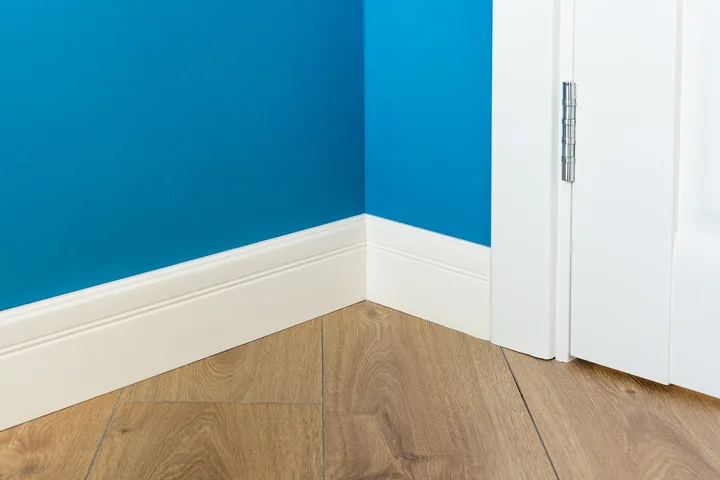
Floors and walls are built separately, and they meet imperfectly. Baseboard trim hides that seam. A room without it looks unfinished — raw gap, exposed paint edges. But the protective function matters just as much as the visual one.
Before vacuum cleaners, a broom handle striking the lower wall was a daily event. Baseboards took the hit so the plaster didn’t. Today they do the same job for furniture legs, shoe scuffs, and the errant kick of a canister vacuum. Plain or ornate, three inches or eight, the function hasn’t changed since the first ones were nailed up.
The Logic Behind the Round Doorknob
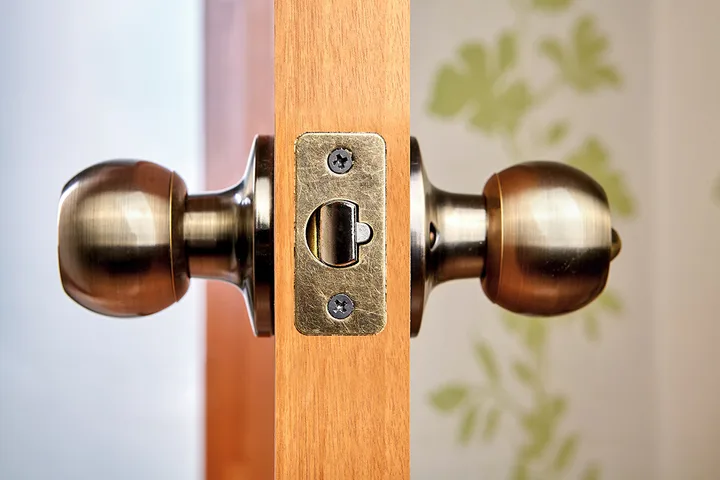
Lever handles feel obvious in hindsight. Push down, door opens, no grip required. So why did round knobs dominate for so long? The answer starts inside the hardware itself. Early latch mechanisms used rotating parts that paired naturally with a round, twisting knob. The knob’s symmetry meant it could be grabbed from any angle, and producing one required far simpler metalworking than casting a lever.
There’s also a security argument that still holds: round knobs are genuinely harder for small children and most animals to operate. A dog can nudge a lever. A knob requires coordinated grip and rotation. Accessibility standards now push toward levers — easier for people with limited hand strength, and rightly so — but round knobs aren’t disappearing from older homes anytime soon.
How Glass Shaped the Way We See Outside
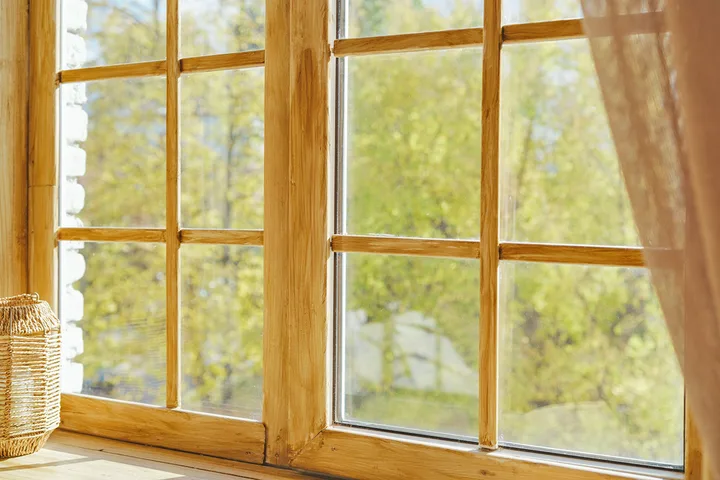
Those small panes divided by thin wooden strips aren’t just a style choice. They’re a record of what glassmakers could actually produce. For most of history, manufacturing a single large flawless sheet of glass was impossible. The answer was many small panes held together by muntins — thin wooden or metal bars gridding the window. Smaller pieces were easier to make, transport, and replace when broken.
The structural logic reinforced it: earlier walls weren’t built to carry the load of a single large window opening. Dividing the glass reduced stress on both the panes and the masonry around them. Mullions, the heavier vertical bars separating whole window units side by side, handled the bigger structural spans. When industrial glassmaking finally made large sheets affordable, the divided-light look had become so associated with craftsmanship that architects kept using it anyway. Most of those grids in modern windows are purely cosmetic — plastic strips glued to a single pane — but they’re a direct echo of a genuine constraint.
The Overhang That Keeps You Upright
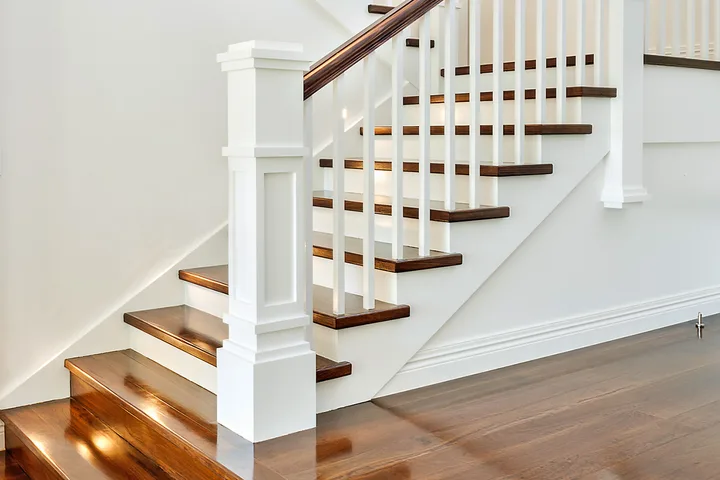
The slight lip jutting past the vertical face of each stair tread is called a nosing. A foot coming down a staircase doesn’t land flat — it strikes the front edge first. The nosing extends that landing zone, giving the foot a larger, more forgiving target. On narrow stairs, that extra inch is the difference between a sure step and a slip.
Building codes in most jurisdictions require a nosing for exactly this reason. The overhang also protects the riser — the vertical face of the step — from the repeated impact of descending feet. Without it, the front corner wears down first, rounding off and growing slicker over years of use. The nosing takes the abuse so the step doesn’t. Small feature. Serious purpose.